
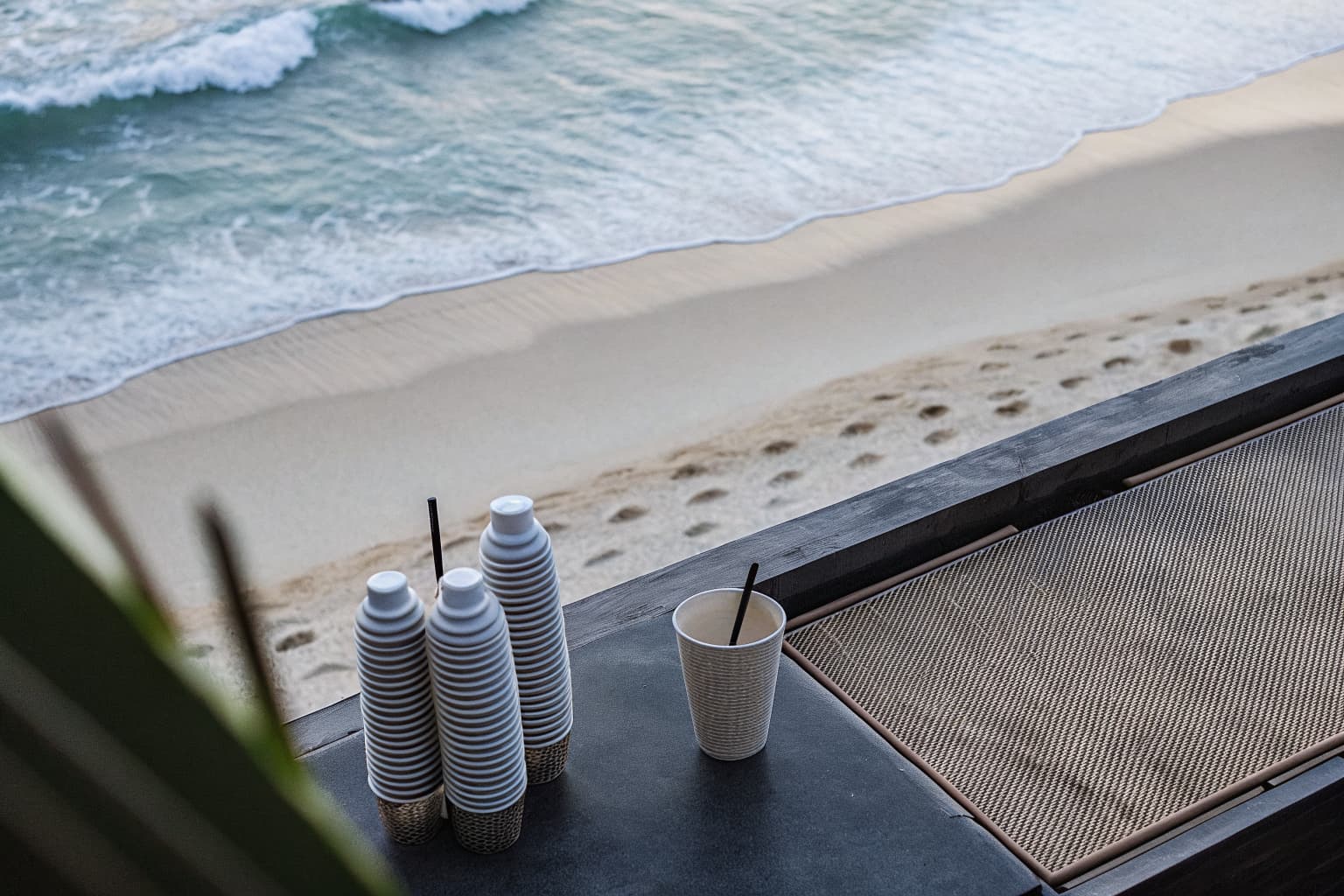
The global hotel industry produces an estimated 289,700 tons of plastic waste every year — amenity bottles, in-room cups, pool-deck drinkware, and food service packaging moving through hundreds of thousands of rooms every night. Almost none of it stays whole. Sunlight, wave action, and simple wear fragment it into microplastics long before most of it ever reaches a proper landfill.
PHA — a biodegradable bioplastic that breaks down completely in soil, freshwater, and marine environments — is a drop-in replacement for nearly every one of those items. If the hotel brands with the largest global footprint made that switch across their portfolios, the change wouldn't just be operational. It would measurably shift how much new microplastic enters oceans, soil, and the human food chain every year. Here's the math behind that shift, and what it would actually take.
The Hotel Industry's Hidden Microplastic Footprint
Hospitality is one of the most plastic-intensive service industries in the world, and one of the least examined for it. A single property runs plastic through nearly every guest touchpoint — welcome amenities, in-room coffee cups, poolside drinkware, banquet serviceware, room-service trays, minibar packaging — multiplied across hundreds of rooms and thousands of guest-nights a year.
Most of that plastic never gets a real chance at recycling. Amenity bottles carry lotion and shampoo residue, pool cups are contaminated with sunscreen and beverage remnants, and food packaging is soiled by the time housekeeping empties a bin. Contaminated plastic is exactly what recycling facilities reject — which means the overwhelming majority of hotel plastic is headed to landfill or, when local waste systems near coastal properties fall short, directly into waterways.
289,700 Tons
of plastic waste produced by the global hotel industry every year
17M+
hotel rooms worldwide, each a daily source of single-use plastic
170 Trillion
plastic particles already estimated to be circulating in the ocean
How Hotel Plastic Becomes Ocean and Soil Microplastic
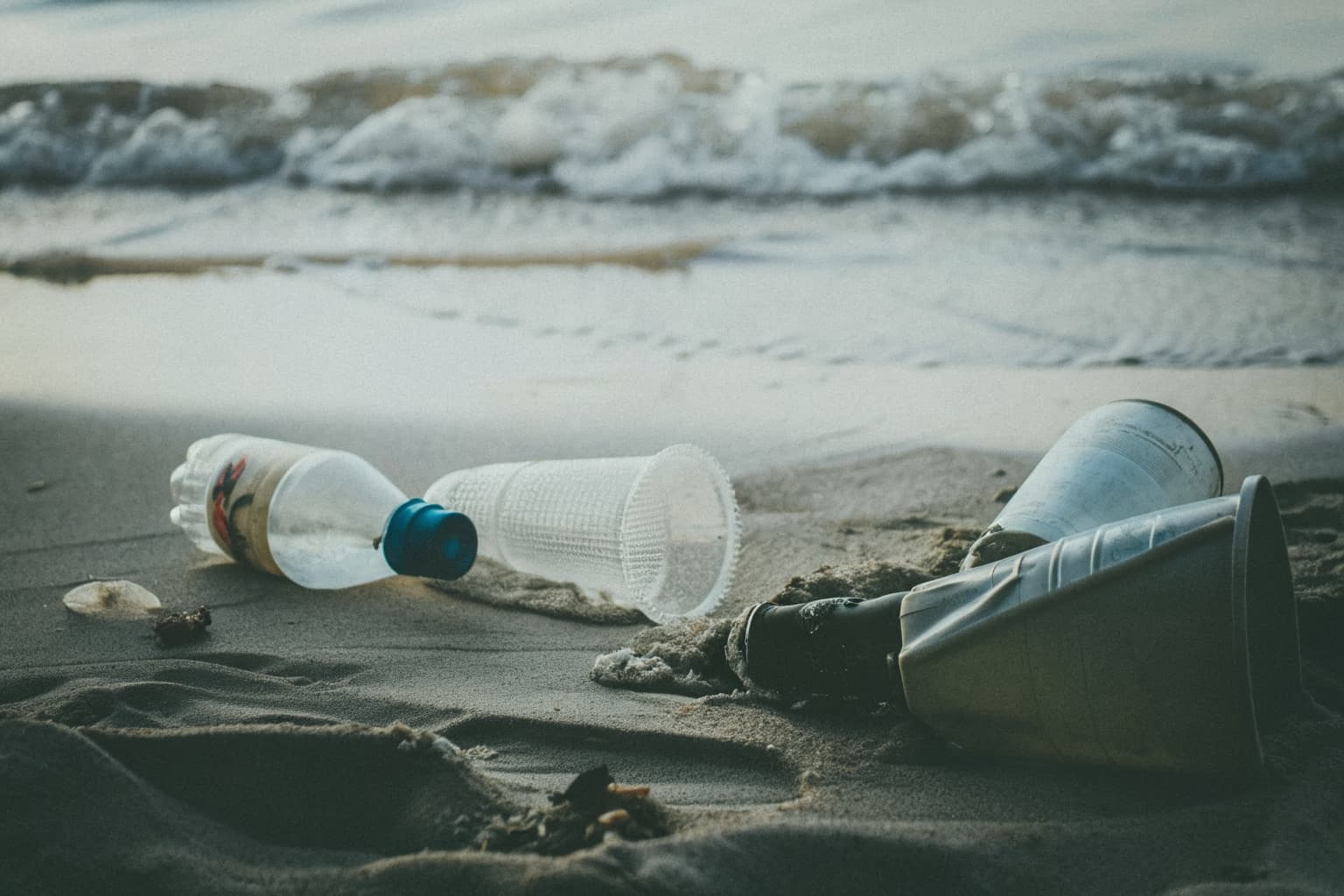
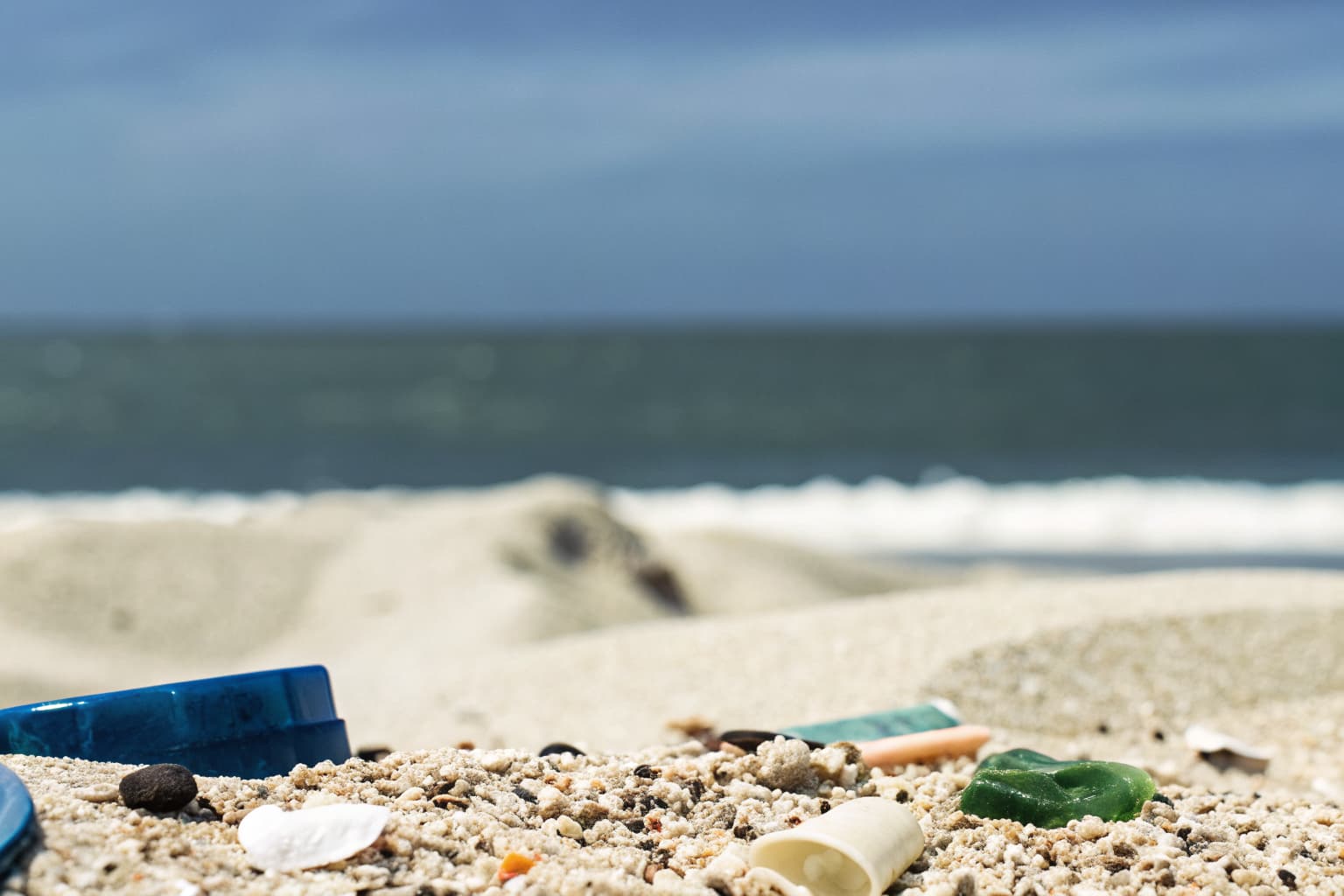
Conventional petroleum-based plastic doesn't decompose — it fragments. Sunlight and wave action break amenity bottles, cups, and straws into smaller and smaller pieces over decades, but the material itself never disappears. Those fragments, classified as microplastics once they drop below five millimeters, are small enough to be ingested by fish, absorbed into soil, and carried into groundwater.
Coastal and resort properties sit closer to this pathway than almost any other commercial plastic source. A cup or straw left on a beach deck, or plastic waste moving through an overwhelmed local waste system, has a direct, short route into the ocean with no landfill layover required. Multiply that across tens of thousands of coastal hotel properties worldwide, and hospitality becomes a disproportionately large contributor to a problem the industry rarely gets named for.
The Human Health Exposure Loop
Microplastics don't stay in the ocean. They're ingested by the fish that end up on hotel restaurant menus, absorbed into the soil that grows the produce on a breakfast buffet, and detected in rainfall and drinking water supplies near the same coastlines that support tourism. The average person now ingests an estimated 5 grams of microplastic every week — roughly the weight of a credit card — primarily through water, seafood, and air.
That means the plastic a hotel discards this year doesn't just leave the property — it re-enters the same food and water systems that hotel's own guests, staff, and surrounding community depend on. The exposure loop closes locally, long before the plastic itself has fully broken down.
What Actually Changes When PHA Replaces Hotel Plastic
PHA is produced through bacterial fermentation rather than petroleum refining, and it's built to complete a full biological cycle. Instead of fragmenting into smaller and smaller pieces of the same material, PHA is broken down by naturally occurring microorganisms into water, carbon dioxide, and biomass — in soil, in freshwater, and in marine environments. There is no microplastic stage in that process.
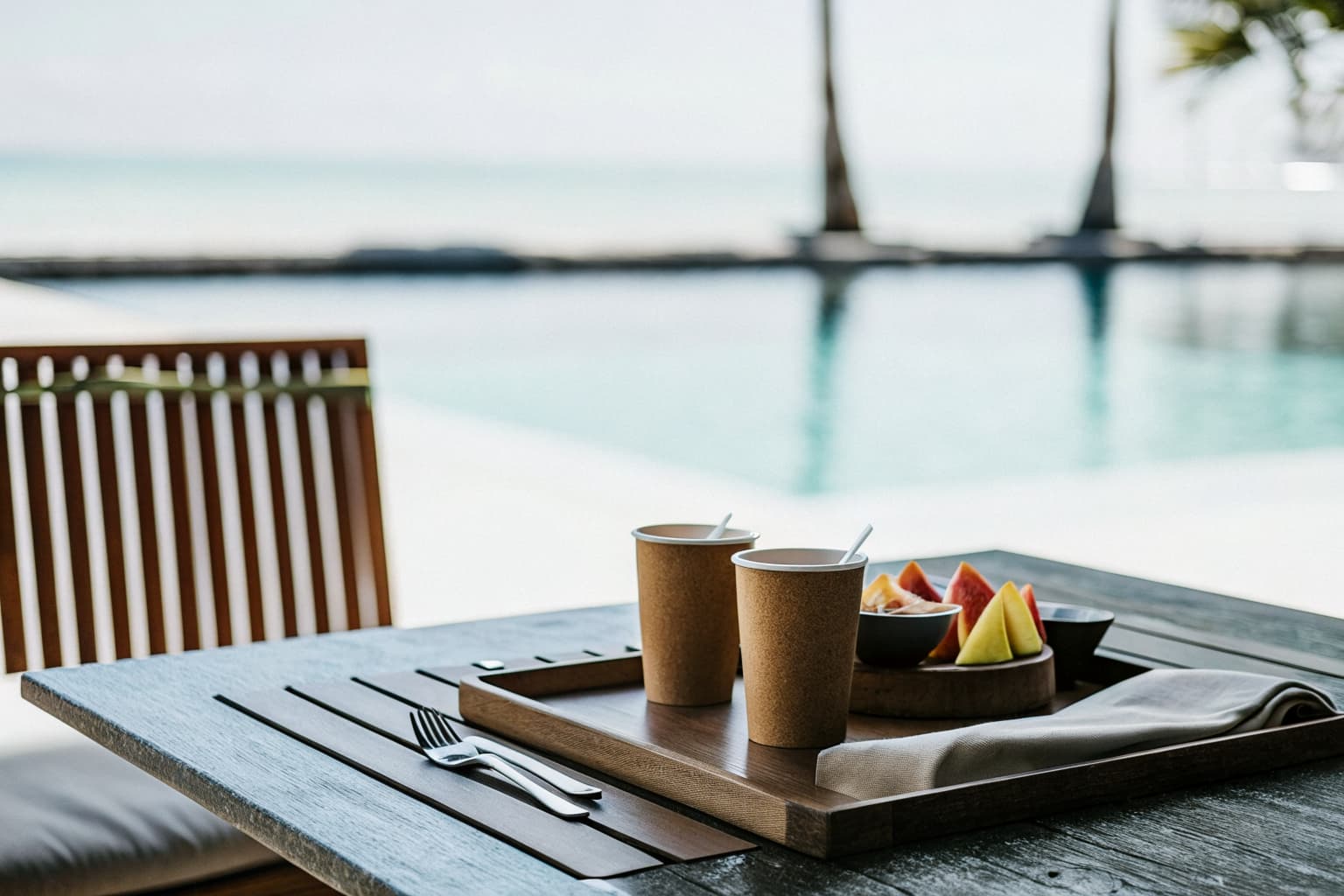
For a hotel brand, that means every amenity bottle, cup, straw, and piece of food packaging that would have taken 400 to 1,000 years to fragment instead returns fully to the environment within a single biodegradation cycle. The item still gets used exactly the way guests expect — same shape, same function, same service experience — but what happens to it after checkout changes completely.
Conventional Plastic vs. PHA in Hospitality
The comparison isn't really about performance — PHA already matches conventional plastic on shape, durability, and service standards. It's about what each material does after it leaves the property.
Conventional Petroleum Plastic
Strength
Lowest unit cost and universally available from existing hospitality suppliers, with no service redesign required.
Considerations
Fragments into microplastics over 400 to 1,000 years, contaminates easily, and is rejected by most recycling streams once it's touched food, lotion, or sunscreen.
Best For
Properties with no current plastic-reduction commitment or certification target.
PHA Biodegradable Bioplastic
Strength
Matches conventional plastic in shape, rigidity, and guest experience while biodegrading completely in soil, freshwater, and marine conditions, with zero microplastic residue.
Considerations
Costs more per unit than conventional plastic and requires sourcing from certified biodegradable suppliers rather than legacy plastic vendors.
Best For
Hotel brands pursuing Green Key, LEED, or EarthCheck certification, or responding to guest and ESG demand for measurable plastic reduction.
The Math: Scaling One Switch to the Global Industry
The world's largest hotel brands — the handful of global groups operating under recognizable flags across thousands of properties — represent an estimated 40% of branded hotel room inventory worldwide. That concentration is exactly what makes their purchasing decisions disproportionately powerful: a materials switch made once, at the corporate procurement level, cascades across thousands of properties without requiring any single independent hotel to make the decision on its own.
Applied against the industry's estimated 289,700 tons of annual plastic waste, a full switch across that 40% share of branded inventory would redirect roughly 116,000 tons of petroleum plastic away from landfill and ocean pathways every year, replacing it with material that completes a biological cycle instead of fragmenting into one. None of that redirected material would ever reach the microplastic stage that current petroleum plastic inevitably reaches.
A single hotel switching its cups is a nice story. A global hotel brand switching its cups is a supply chain decision that changes what an entire industry buys by default.
— Pure Form Solution, on why hotel brand scale matters
Why Large Hotel Brands Are Positioned to Lead the Shift
Hospitality doesn't just consume plastic, it demonstrates purchasing decisions to millions of guests a year, many of whom encounter a PHA cup or amenity bottle for the first time on a hotel stay rather than in a grocery aisle. That visibility does more for guest familiarity with biodegradable materials than most direct-to-consumer marketing ever could.
Large hotel brands also carry negotiating leverage with packaging suppliers that individual properties and smaller chains don't have. A corporate-level PHA commitment can move supplier production volume, bring per-unit costs down across the market, and make the switch more affordable for every independent hotel and restaurant watching what the market leaders do next.
That's the multiplier effect behind this math: it isn't only the 116,000 tons redirected directly by the largest brands. It's the downstream adoption those brands make possible for the other 60% of the industry once the supply chain and guest expectations shift underneath them.
A Measurable Shift, Not a Marketing Claim
The microplastics entering oceans, soil, and the human food chain today are the direct result of material choices made decades ago, when petroleum plastic was the only option at hospitality's scale. That's no longer true. PHA matches the performance those choices were originally optimized for, without the multi-century fragmentation problem attached to it.
If the hotel brands with the largest global footprint made the switch, the reduction wouldn't be symbolic. It would be a measurable redirection of plastic waste, at a scale large enough to move industry-wide procurement standards and change what guests come to expect as the default at any hotel, not just the ones already committed to it.
The material exists today. What's left is the decision to build it into procurement at the scale that actually moves the number.
Explore Pure Form Solution Products