
What Is PHA Biodegradable Packaging and How Does It Work?
By Pure Form Solution · Published
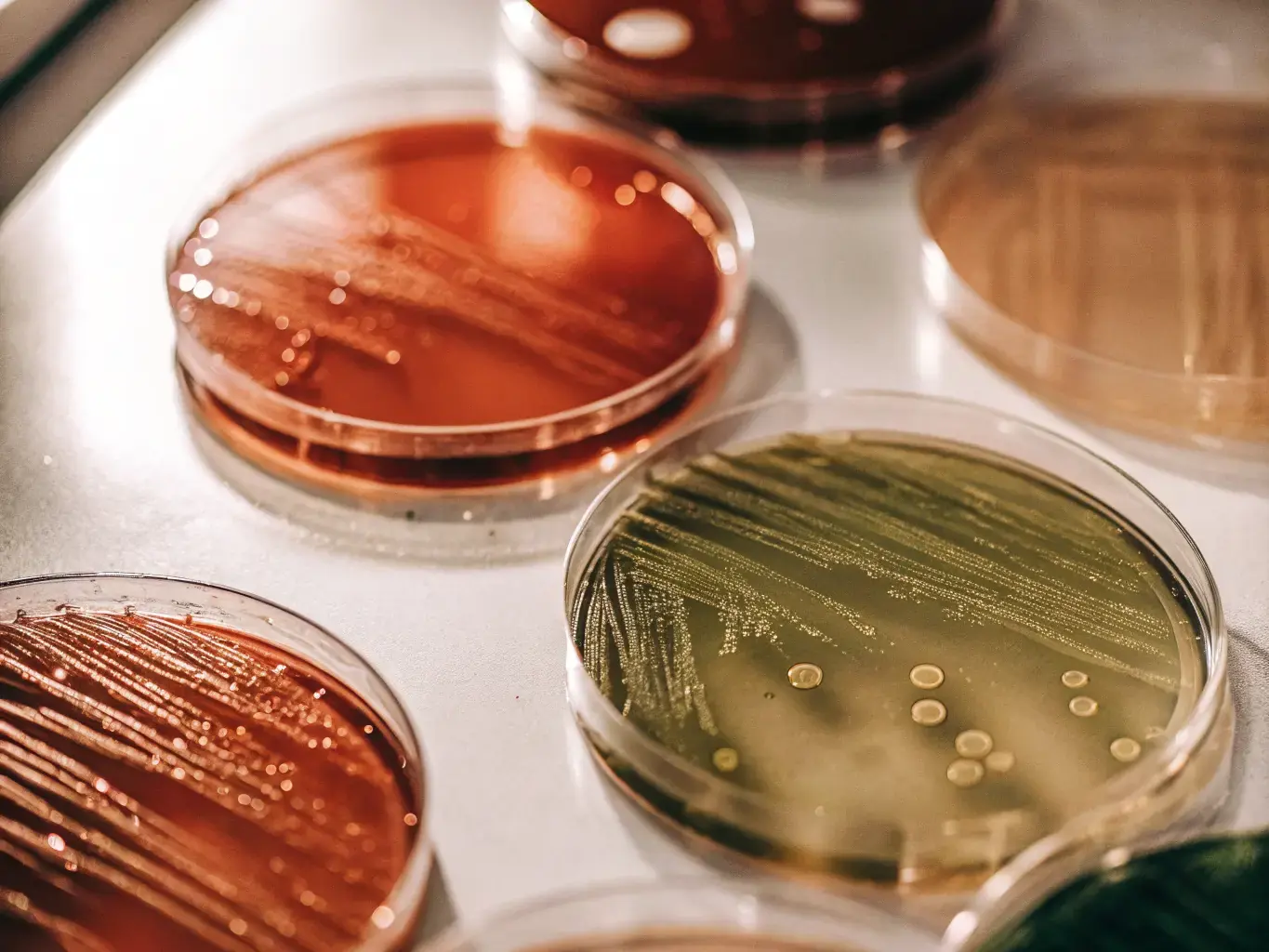
What PHA means
PHA stands for polyhydroxyalkanoates, a family of biopolymers that microorganisms make naturally. Many bacteria store PHA inside their cells as an energy reserve, much as animals store fat. Because nature already produces it, nature also has organisms able to consume it, and that is the basis of PHA biodegradability.
For packaging buyers the key point is simple: PHA is a bio-based plastic resin that can be molded into everyday items such as straws, utensils, cups, containers, bottles and coffee bags, without using petroleum as the raw material.
How PHA is produced
Fermentation
Bacteria are fed a renewable feedstock. Pure Form Solution PHA is produced from fermented canola oil. As the bacteria grow they accumulate PHA granules inside their cells.
Extraction and purification
The PHA is separated from the cells and purified into a polymer. This step is what turns a biological material into an industrial raw material.
Compounding and molding
The polymer is compounded into resin pellets with additives that tune stiffness, toughness and heat behavior for each product, then molded or formed into the finished item using processes similar to those used for conventional plastics.
How PHA packaging works in use
During use, PHA packaging behaves like a plastic item. A straw holds a drink, a utensil cuts and lifts food, a container holds a product. Performance depends on the product formulation, so heat tolerance, flexibility and barrier behavior should be confirmed for each item rather than assumed from the material name.
Because PHA items are formed with familiar equipment and shapes, many businesses can switch without redesigning their service. We still recommend ordering samples and testing them with your own product, temperatures and storage conditions before you commit to volume.
How PHA breaks down
At end of life, microorganisms in suitable environments use PHA as food and convert it into water, carbon dioxide or methane and biomass. This is biodegradation, and it differs from a plastic that merely fragments into smaller pieces.
How fast this happens depends on temperature, moisture, microbial activity and the thickness of the product. That is why third-party testing matters. Our PHA products are tested by TÜV Austria, and qualifying products carry certificates such as OK Compost Home, OK Biodegradable Soil and OK Biodegradable Marine, each defined by specific test conditions. Biodegradable items should still never be littered.
Where PHA packaging is used
Food service and hospitality
Straws, utensils, stirrers, cups, lids and souffle cups for restaurants, hotels, airlines and events.
Food and beverage producers
Containers, jugs, meat trays and coffee bags for producers and retailers.
Healthcare and supplements
Pill bottles and packer bottles for pharmacies, supplement brands and healthcare suppliers, where suitability must be confirmed with documentation.
What buyers should verify
Treat every packaging claim as product specific. Ask for the certificate covering the exact item, check which conditions it addresses, and confirm that the disposal route you describe to customers actually exists in their area. Where an item is used for food contact or pharmaceutical contents, request the supporting documentation for that use before you rely on it.
Also compare PHA with other bioplastics. Our guide to PHA vs PLA explains why the two materials suit different jobs and different disposal routes.
PHA compared with conventional plastic
Conventional plastics such as polypropylene, polyethylene and PET are made from petroleum and are engineered to resist degradation. That durability is useful during use and a problem afterward, because the material persists and fragments into microplastics. PHA is designed differently: its molecular structure can be consumed by microorganisms, which is why qualifying products can be certified for biodegradation under defined conditions.
Day to day, a buyer will notice more similarity than difference. PHA items are molded to familiar shapes, they are handled by the same staff and they sit in the same storage. The difference is in the raw material and in what happens after the item is discarded.
Common questions from buyers
Is PHA the same as PLA?
No. PLA is made by chemically polymerizing plant sugars and is designed for industrial composting. PHA is made by bacteria and can carry certificates for additional environments, depending on the product. Our PHA vs PLA article compares them in detail.
Does PHA biodegrade in the ocean?
Some PHA products are certified under OK Biodegradable Marine, which tests the material under defined marine conditions. The certificate covers specific products and test conditions. It is not permission to litter, and real environments vary.
Can I use PHA for hot food and drinks?
It depends on the item. Each product has its own formulation and temperature behavior. Ask for the specification for the exact product and test it with your own food or drink.
Is PHA packaging more expensive?
Typically PHA costs more per unit than conventional plastic. Pricing depends on item and volume, and many buyers offset some cost by reducing usage and by consolidating suppliers. Request wholesale pricing for a real comparison.
A practical checklist for evaluating PHA packaging
If you are considering PHA for the first time, a short checklist keeps the evaluation focused on facts rather than marketing language. It also makes it easier to compare suppliers on equal terms and to explain the decision to colleagues in purchasing, operations and compliance.
Define the job
Write down what the package holds, the temperature range, how long it must perform and how it is handled. A straw for iced drinks and a container for hot food have very different requirements.
Collect documents
Request the specification sheet and the certificates for each product you are considering, and check the standards and test conditions named on them.
Run samples in real use
Use the products with your own food, drinks, filling equipment and storage, and record the results.
Confirm the disposal story
Decide how you will tell customers to dispose of the item and verify that this route exists in your area.
Price at volume
Request wholesale pricing for your expected annual quantities and compare it with your current packaging cost.
Next steps
Browse the PHA packaging solutions hub to see every product and its certification status, or read the industry pages for hotels, restaurants, coffee and beverage, food manufacturing and pharmaceutical packaging. When you know which items you want to test, request samples or wholesale pricing and our team will help you build a trial.
Explore related solutions
Keep reading
Ready to evaluate PHA packaging for your business?
Request wholesale pricing, samples or custom packaging information.