
Sustainable Packaging Options for Coffee Roasters and Beverage Brands
By Pure Form Solution · Published
Why coffee packaging matters
Coffee is a product people buy for craft and provenance, so packaging is part of the brand. Roasters and beverage companies also use packaging at several points: retail bags, shipping cartons, takeaway cups and lids, stirrers, straws and bottled drinks. Conventional versions of these are mostly petroleum-based plastic or plastic-lined materials.
Compostable alternatives let a coffee brand match its sustainability message to what the customer holds, if the claims are supported by documentation.
Retail coffee bags
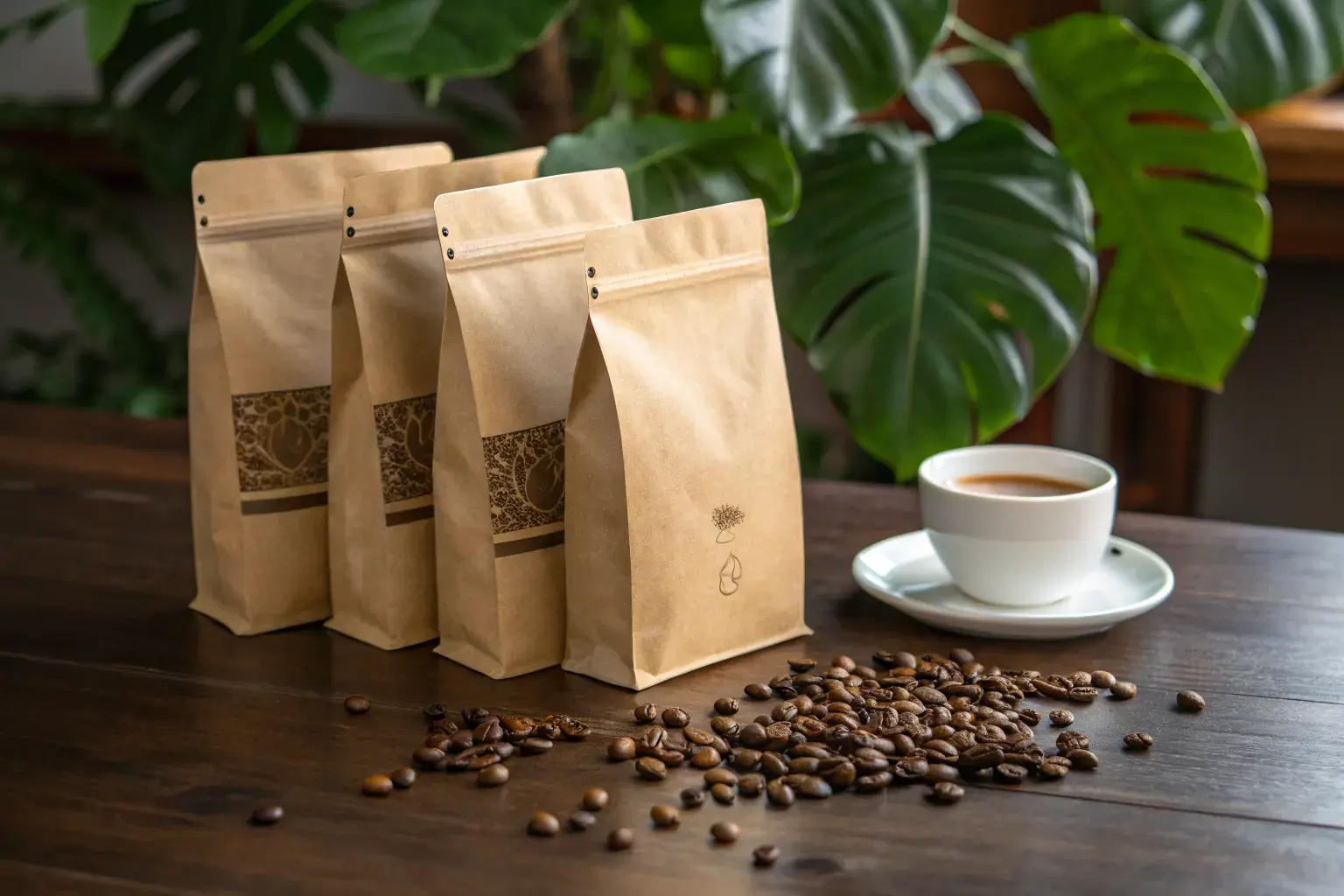
Coffee needs protection from oxygen, moisture and light, and freshly roasted beans release gas. Conventional bags use plastic or foil layers to manage this. PHA coffee bags are made for boutique and specialty coffee as a compostable alternative.
Barrier performance and shelf life depend on your roast, grind, packing process and storage time. Order samples, fill them on your line and run shelf-life and freshness checks with your own coffee before committing. A one-way valve, if you use one, should also be tested with the bag.
Cups, lids, stirrers and straws
Cups and lids
Compostable cups and lids serve cafes and kiosks. Confirm temperature suitability for hot drinks and check lid fit with your cup sizes.
Stirrers
PHA coffee and cocktail stirrers replace plastic stir sticks at coffee bars.
Straws
PHA straws suit iced coffee and cold beverages.
Bottled and ready-to-drink beverages
Cold brew, juices, water and functional drinks usually travel in PET bottles. Our compostable bottling is made from a sugarcane-based PLA bioplastic and is designed for industrial composting, which makes it a candidate for water and some beverage programs. PHA milk and juice jugs serve dairy and juice producers.
Carbonation, acidity, hot-fill processes and shelf-life requirements all affect bottle choice, so discuss your filling process with us and test samples before scale-up.
Barrier and product protection
Beverage and coffee packaging has to protect flavor and freshness. Ask for technical information, test with your product over its full shelf life and set pass criteria before you buy. Document the results so you can compare packaging options objectively.
Branding and customization
Packaging is a branding surface. Ask about custom printing, labels, sizes and co-branded options for bags, cups and bottles, and about minimum order quantities. Tell customers clearly how to dispose of the packaging. State only what the certificate for each item supports, for example industrial composting or home composting.
Compostable coffee bags: what to test
Freshness and shelf life
Pack the same roast in compostable and current bags and compare aroma, flavor and staling over your normal shelf life.
Seal and closure
Test heat sealing, zippers or ties and any one-way valve on your equipment.
Handling
Check strength through shipping, stacking and retail display.
Printing and labeling
Confirm label adhesion or printed branding looks as intended.
Disposal and customer messaging
Customers need to know what to do with an empty bag or cup. Name the disposal route that the certificate supports and that exists in their area, such as industrial composting where facilities exist or home composting where the product is certified for it. Avoid generic claims.
Coffee customers are often well informed, so honest, specific messages build trust. Include disposal instructions on packaging or at the point of sale, and provide a link to more information for those who want it.
Cost and supply for roasters and beverage brands
Packaging is a meaningful share of cost for small roasters. Compostable bags and cups usually cost more per unit than conventional equivalents, so test the price at your real volume and look at how the change can support your pricing and brand positioning.
Order quantities matter too. Ask about minimums, lead times and options for staged orders, and plan around seasonal peaks such as holiday gift packaging. If you sell wholesale or through retailers, ask whether your customers have packaging requirements you can meet with certified materials.
Start with one SKU
Move your best-selling roast or one cafe location first, then expand.
Plan inventory
Compostable packaging has storage guidance. Ask for it so stock stays in good condition.
Offer a sample to key accounts
Retail and wholesale customers can respond to a visible packaging change.
Measuring results and customer response
Record shelf-life tests, return and complaint rates, and customer comments about the new packaging. Ask retail partners and cafe customers what they noticed. Many roasters find the packaging change becomes a talking point on social media and in wholesale conversations, which has marketing value beyond the materials themselves.
Revisit your packaging mix each year. As your range grows, you may add compostable gift packaging, cups for events or bottled products, and each new item benefits from the same test, document and communicate approach.
Wholesale and getting started
Start with a pilot, such as a single roast in compostable bags and a takeaway program in one location. Review the coffee and beverage packaging page for product sets and FAQs, and see the PHA packaging solutions hub for every product. Request wholesale pricing or product samples to begin.
Explore related solutions
Keep reading
Ready to evaluate PHA packaging for your business?
Request wholesale pricing, samples or custom packaging information.