
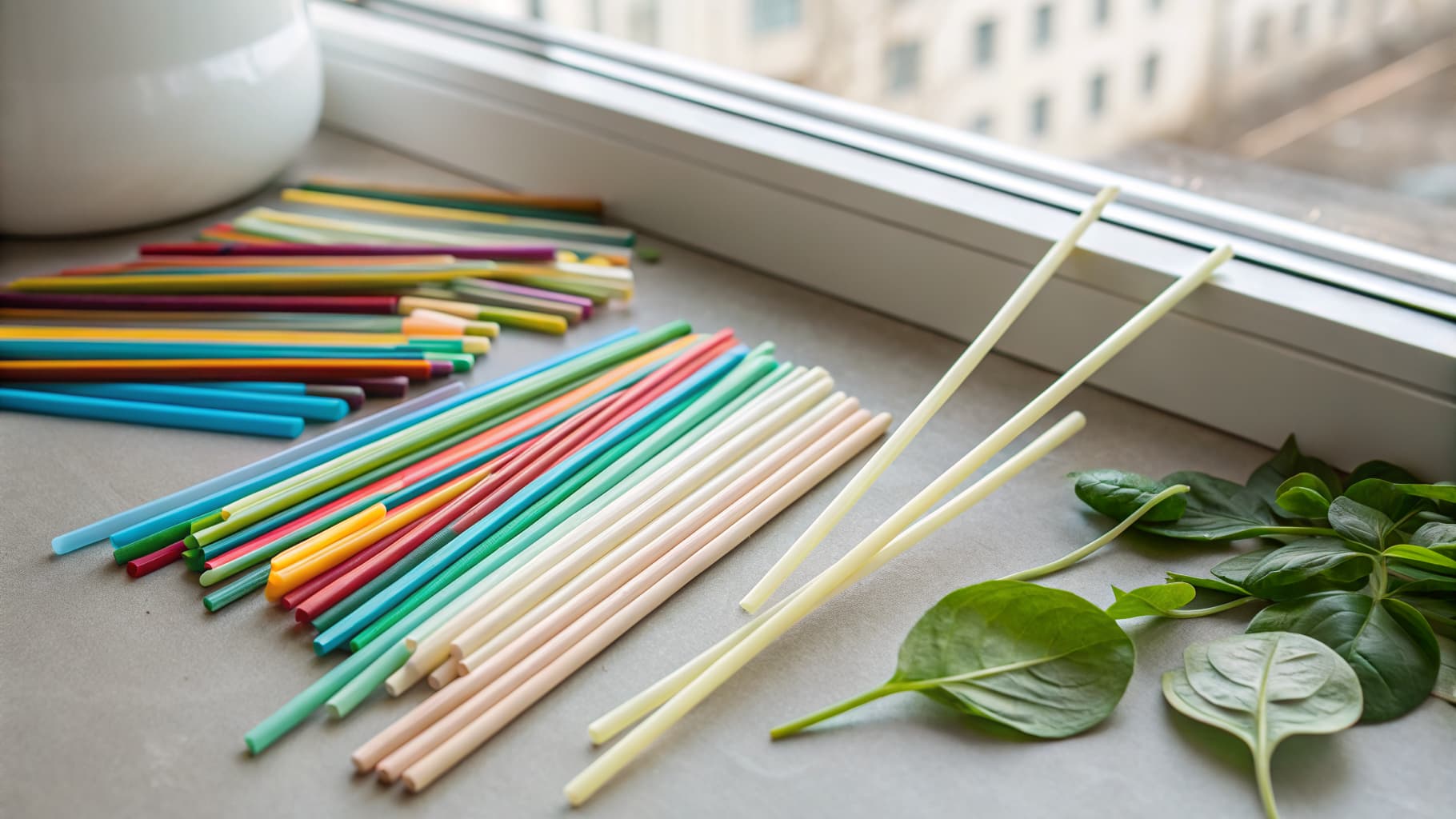
Picture a single day where every plastic straw on Earth was swapped for a PHA straw. No new factories, no behavior change from consumers — just a material switch. The ripple effects would touch human health, ocean ecosystems, and waste streams on a scale that is easy to state and hard to fully picture. This is the math behind that switch.
Plastic straws are small, but their footprint is not. Because they are lightweight, non-recyclable in practice, and used for minutes before disposal, straws punch far above their size in terms of environmental damage. PHA (polyhydroxyalkanoate) — a biopolymer produced by bacteria rather than petroleum — offers a straw that performs the same job and disappears completely at the end of its life. Below, we break down what actually changes, statistic by statistic, if the switch happens at scale.
The Scale of the Plastic Straw Problem
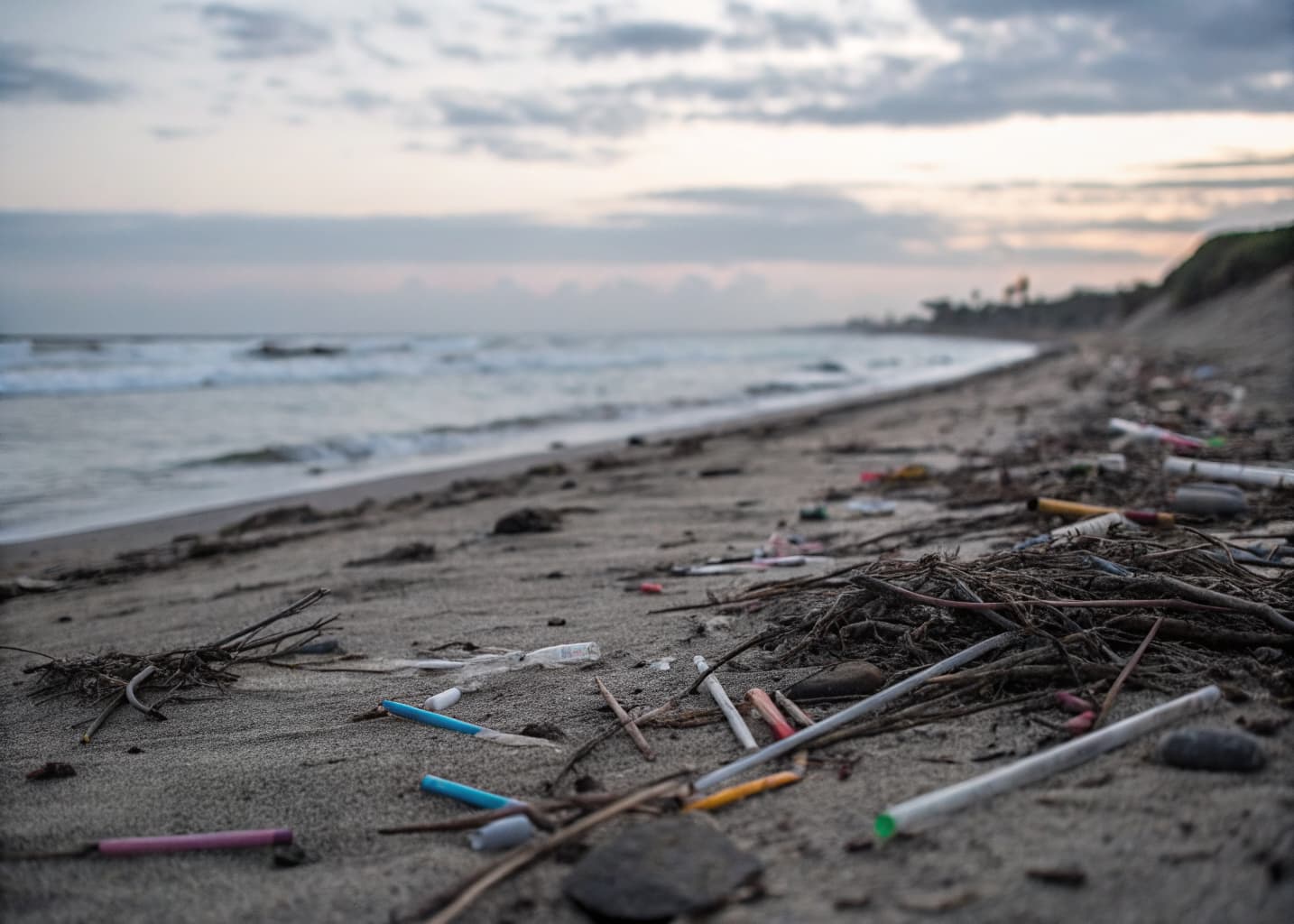
Estimates place daily plastic straw use in the United States at roughly 500 million — enough to circle the Earth's equator more than twice if laid end to end, every single day. Globally, researchers estimate as many as 8.3 billion plastic straws currently pollute the world's coastlines, a figure drawn from modeling of global plastic waste and beach debris studies.
Straws and stirrers are not a marginal contributor to ocean litter — they consistently rank among the top 10 items collected during Ocean Conservancy's International Coastal Cleanup, with volunteers gathering hundreds of thousands of straws in coastal cleanups conducted in a single day, in a single year. And unlike bottles or bags, straws are too lightweight and too small for most recycling facilities to sort, meaning almost none of them are ever recovered.
500 million/day
Estimated plastic straws used daily in the U.S. alone — nearly all single-use and non-recyclable.
8.3 billion
Plastic straws estimated to currently pollute coastlines worldwide, based on global waste modeling.
200+ years
Time a single plastic straw can take to decompose — and it never fully disappears, only fragments.
The Human Health Cost of Plastic Straws
The environmental case against plastic straws is well documented, but the health case is catching up fast. A landmark 2022 study published in Environment International detected microplastic particles in the bloodstream of 80% of people tested — the first confirmed evidence that plastic particles cross from the environment directly into human blood. Since then, researchers have identified microplastics in lung tissue, placental tissue, breast milk, and — in a widely reported 2024 study — human brain tissue.
Plastic straws contribute to this exposure in a direct way. Most are made from polypropylene or polystyrene, materials that can leach chemical additives — including BPA, phthalates, and styrene — when exposed to heat, acidity, or prolonged contact with liquid. A hot drink sipped through a plastic straw is a small but real chemical exposure event, repeated billions of times a day across the population.

The Environmental Math: What Switching Actually Saves
A standard plastic straw weighs a little under half a gram. At an estimated 500 million straws used per day in the U.S. alone, that adds up to roughly 182.5 billion straws a year — or approximately 76,000 metric tons of petroleum-based plastic manufactured, used for minutes, and discarded annually, just from straws, just in one country.
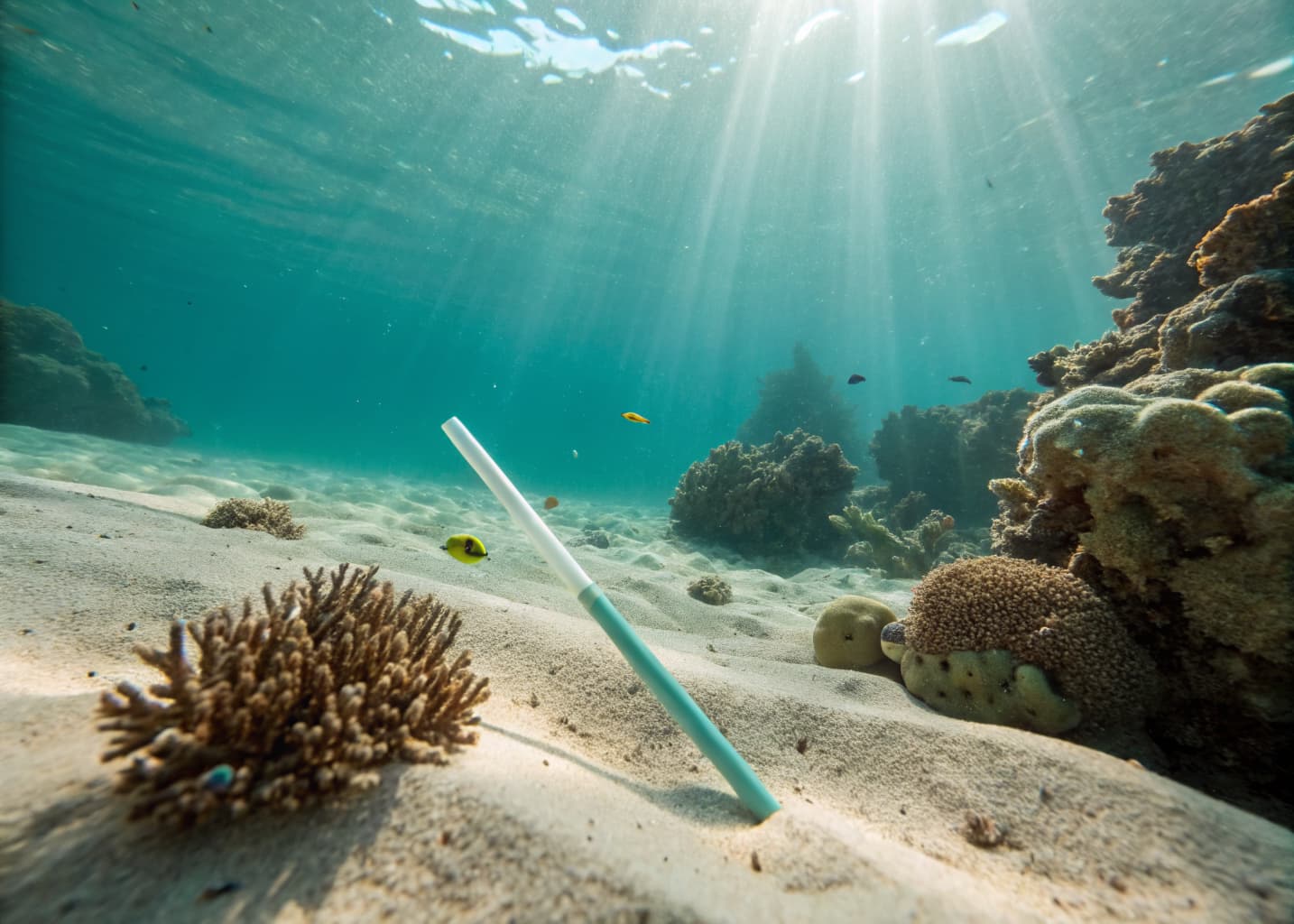
Replace that volume with PHA and the material itself changes its behavior on every axis that matters. PHA straws fully biodegrade in ocean water within 6 to 18 months, compared to 200+ years for conventional plastic — and PHA leaves no microplastic residue behind, because bacteria metabolize it completely into water, CO₂, and biomass rather than fragmenting it into smaller and smaller plastic particles.
How PHA Compares to Other Straw Materials
Businesses evaluating a switch away from plastic often default to paper or PLA without understanding the tradeoffs. Here is how the major straw materials stack up against the actual problem PHA is built to solve.
Paper Straws
Strength
Widely available and familiar to consumers
Limitation
Softens within minutes in liquid; many brands are lined with PFAS "forever chemicals" to resist sogginess, introducing a different toxic exposure.
PLA (Corn-Based) Straws
Strength
Plant-based origin with no petroleum inputs
Limitation
Requires industrial composting at sustained high heat to break down. In soil, landfill, or ocean water, it behaves almost identically to conventional plastic.
Metal or Glass Straws
Strength
Reusable and durable over hundreds of uses
Limitation
Impractical for single-use foodservice at volume; requires sanitation infrastructure and carries a choking/injury risk for young children.
PHA Straws
Strength
Biodegrades completely in soil, freshwater, and ocean water within months. No microplastic residue. No synthetic leaching.
Limitation
Currently a higher unit cost than paper or PLA — a gap that narrows as production scales.
What Actually Changes When PHA Replaces Plastic
The switch from plastic to PHA is not a marketing upgrade — it changes measurable outcomes across health, waste, and marine ecosystems. Here is what shifts, one straw at a time.
- 01
Petroleum demand drops to zero
PHA is produced by bacteria fermenting organic material such as canola oil, not refined from crude oil — removing straws entirely from the fossil fuel supply chain.
- 02
Decomposition time falls from centuries to months
Where a plastic straw persists for 200+ years, a PHA straw fully biodegrades in soil or ocean water within roughly 6 to 18 months.
- 03
Microplastic generation stops
Plastic straws do not disappear — they fragment into microplastics that persist indefinitely. PHA is enzymatically consumed by bacteria and does not fragment.
- 04
Chemical leaching into beverages ends
PHA requires no BPA, phthalates, or PFAS coatings to function — eliminating a direct, repeated chemical exposure pathway tied to hot and acidic drinks.
- 05
Marine wildlife exposure declines
Straws consistently rank among the top items collected in coastal cleanups. A biodegradable straw removes that specific, recurring point of entry into marine food chains.
Why Businesses Are Moving First
Restaurants, hotels, and beverage brands are not switching to PHA purely out of goodwill — the regulatory and consumer landscape is shifting underneath them. Single-use plastic straw bans and restrictions have expanded across dozens of U.S. states and cities, the European Union, and international markets, and enforcement is tightening year over year.
PHA is positioned to meet requirements that paper and PLA currently cannot — particularly marine biodegradability standards, which are becoming a differentiator in procurement decisions for hospitality groups, venues, and institutional food service. Businesses adopting PHA now are getting ahead of mandates rather than scrambling to comply after the fact.
"When you run the numbers on straws alone — hundreds of millions used every day, decades to decompose, and a growing body of evidence on human exposure — the case for switching to PHA stops being about optics and starts being about math."
— Jim McGinnis, V.P. of Marketing & Sales, Pure Form Solution LLC
Pure Form Solution's Role in the Shift
Pure Form Solution's biodegradable straw line is engineered as a direct, drop-in replacement for conventional plastic — same rigidity, same feel, same performance in hot and cold beverages — without the petroleum, the additives, or the centuries-long decomposition timeline.
We work with certified manufacturers whose testing confirms zero microplastic residue after full biodegradation, a standard that goes beyond marketing language and into verified, third-party performance data. Every straw we produce is built around one question: what happens to this material after someone is done using it?
For businesses ready to make the switch at scale, that question has a clear answer — and the numbers above show exactly what changes when the answer is PHA instead of plastic.
The Bottom Line
If every plastic straw in use today were replaced with PHA, the impact would not be symbolic — it would be measurable. Tens of thousands of metric tons of petroleum-based plastic would be removed from waste streams annually. Decomposition timelines would shrink from centuries to months. A repeated, direct source of chemical exposure in hot and cold beverages would be eliminated.
None of this requires a new invention or an unproven technology — PHA already exists, already performs like conventional plastic, and is already available at commercial scale. The only thing standing between the plastic straw problem and its solution is adoption.
That is a choice businesses and consumers can make today, one straw at a time.
Explore Pure Form Solution Products