
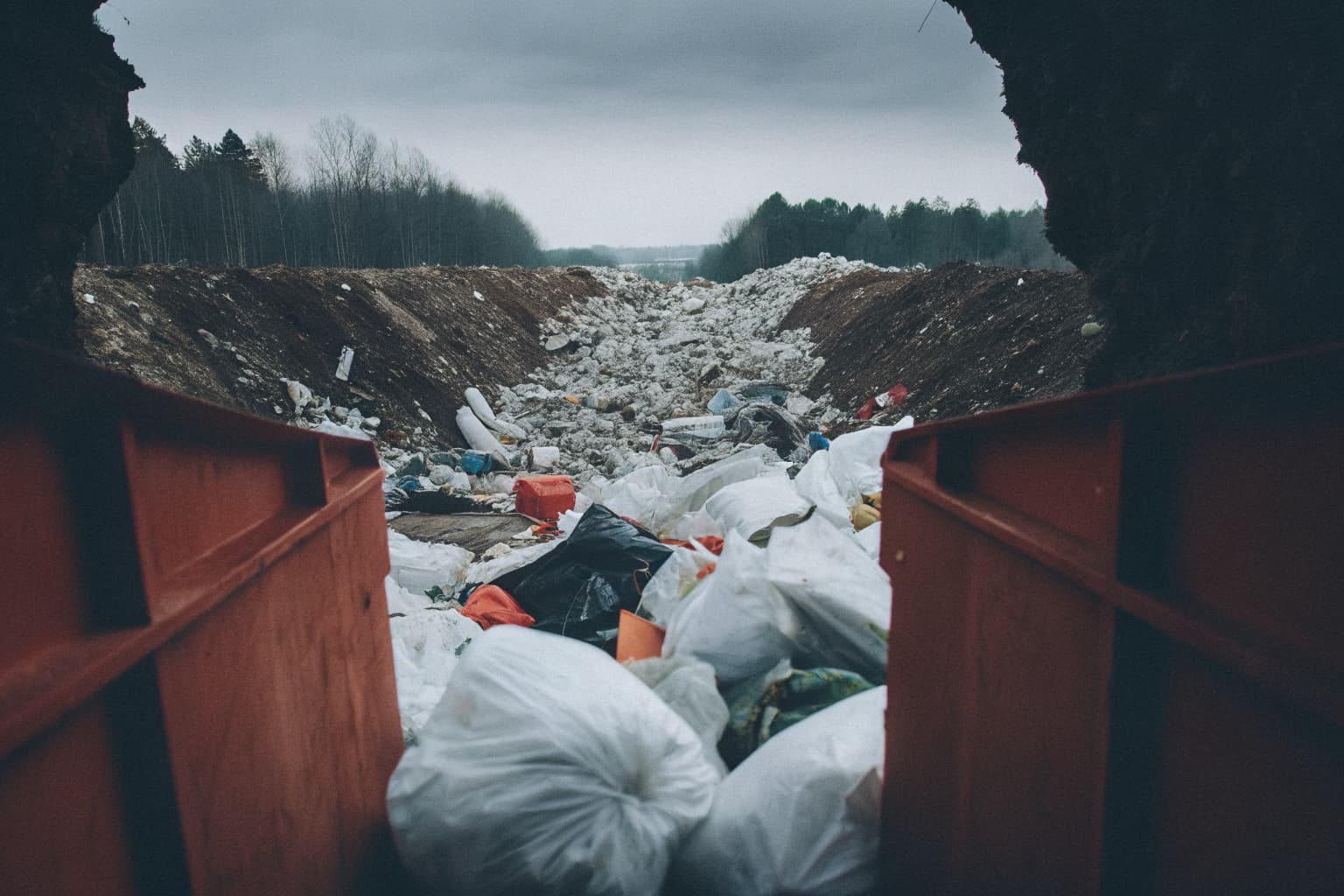
The world is on pace to landfill more plastic in 2027 than in any prior year in history. Global plastic production has climbed past 460 million metric tons annually, and with recycling rates for most plastics still stuck below 10%, the overwhelming majority of it is headed for one of three places: a landfill, an incinerator, or the open environment.
Here is the statistical breakdown of how much plastic waste is projected to hit landfills in 2027, where it actually comes from, what it costs in soil and groundwater contamination, and the measurable difference it makes when that plastic is replaced with PHA (polyhydroxyalkanoate) bioplastic instead.
The Scale of the Problem: How Much Plastic Is Headed for Landfills in 2027
Global plastic waste generation is projected to reach roughly 400 million metric tons in 2027, continuing a trajectory that has more than doubled production since 2000. Of that volume, an estimated 81% — well over 320 million metric tons — will be landfilled, openly dumped, or leaked into the environment rather than recycled or properly incinerated.
In the United States alone, municipal solid waste landfills are projected to receive more than 36 million tons of plastic in 2027, making plastic the single largest material category by volume in the American waste stream — ahead of paper, food waste, and metal combined in some regional facilities.
~400M metric tons
Global plastic waste projected for 2027, continuing a decades-long upward trend in production and disposal.
~81% landfilled or dumped
Share of that plastic waste that will never be recycled — most of it buried, openly dumped, or leaked into waterways.
450+ years to break down
The estimated time a single piece of conventional petroleum plastic takes to fully decompose in a landfill environment.
Where This Plastic Actually Comes From
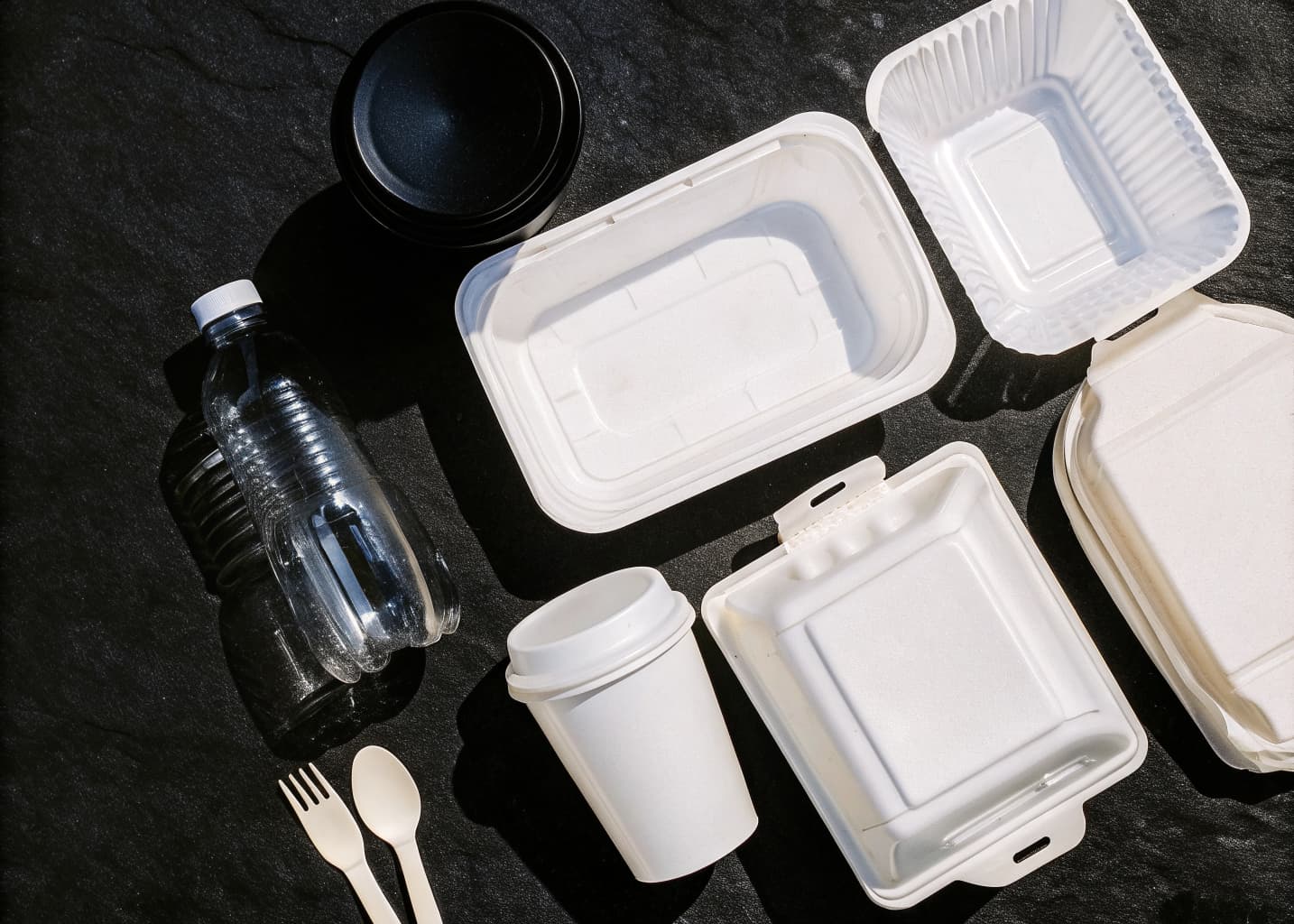
Packaging is the single largest contributor to landfill plastic, accounting for an estimated 40% of all plastic waste generated worldwide. That includes food service containers, bottles, bags, clamshells, cups, lids, and wraps — nearly all of it single-use, and nearly all of it made from PET, HDPE, or polystyrene that municipal recycling programs either cannot process economically or simply reject due to contamination.
Food service and hospitality operations are a disproportionate driver of this volume. A single mid-size restaurant can generate over 100,000 disposable plastic items a year — cups, lids, utensils, straws, clamshells, and portion cups — nearly all of which are landfill-bound within hours of first use. Multiply that across hotels, hospitals, airlines, and event venues, and single-use foodware alone accounts for tens of millions of tons of the 2027 landfill total.
What Landfill Plastic Actually Costs: Soil, Groundwater, and Human Health
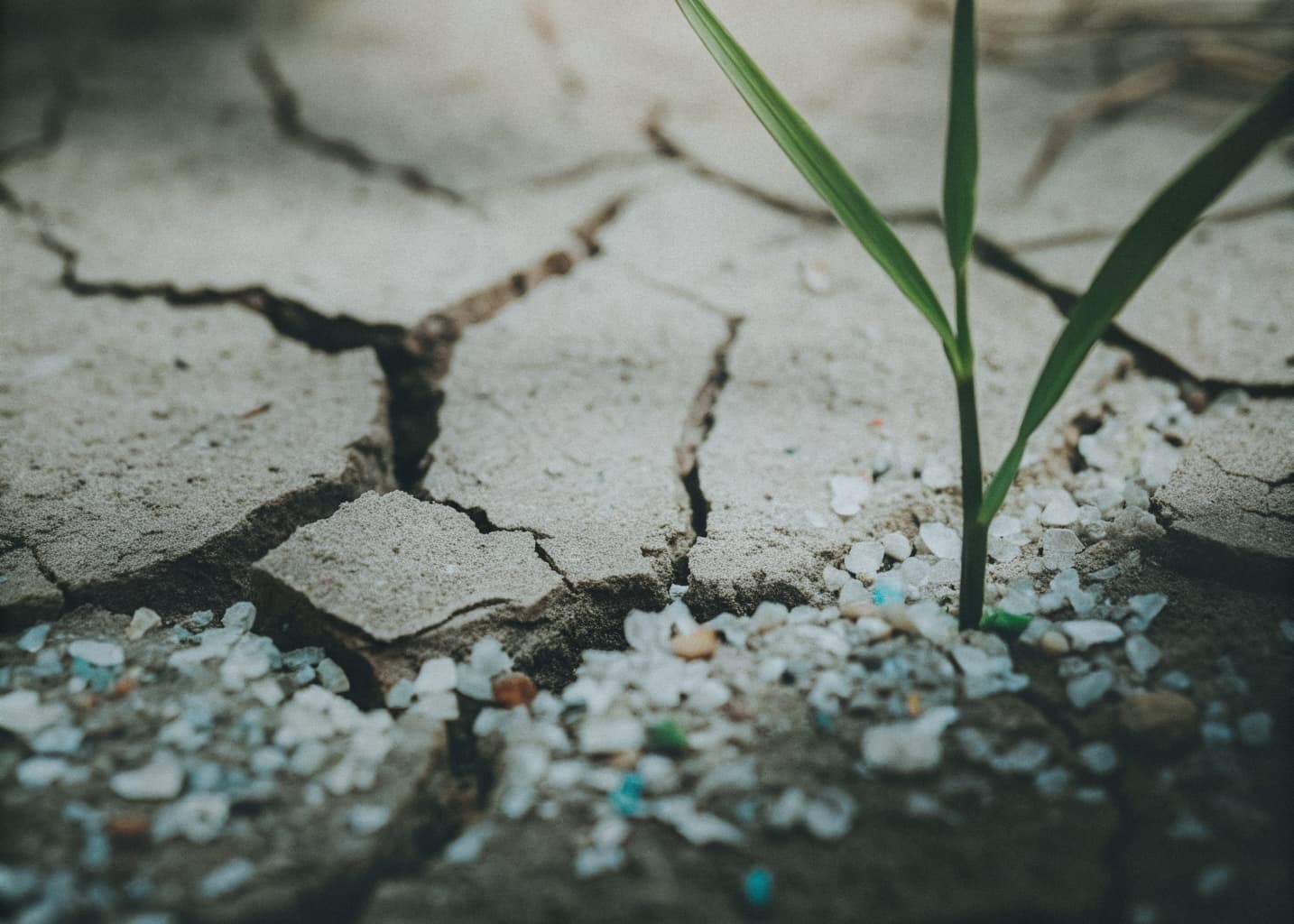
Plastic in a landfill does not sit inert. As petroleum plastics are exposed to sunlight, moisture, and mechanical stress over years, they fragment into microplastics — particles under 5mm that leach into surrounding soil and, through landfill runoff, into groundwater supplies. Studies of landfill leachate have detected microplastic concentrations far exceeding those found in untreated wastewater, with the particles carrying adsorbed heavy metals and persistent organic pollutants deep into the surrounding water table.
The human health exposure pathway is direct: microplastics from landfill leachate have been found in agricultural soil near disposal sites, in the crops grown in that soil, and ultimately in drinking water drawn from nearby aquifers. Researchers now estimate the average person ingests and inhales tens of thousands of microplastic particles a year, with landfill leachate identified as one of the primary terrestrial contamination pathways alongside ocean plastic breakdown.
The Math on Switching to PHA: What Actually Changes
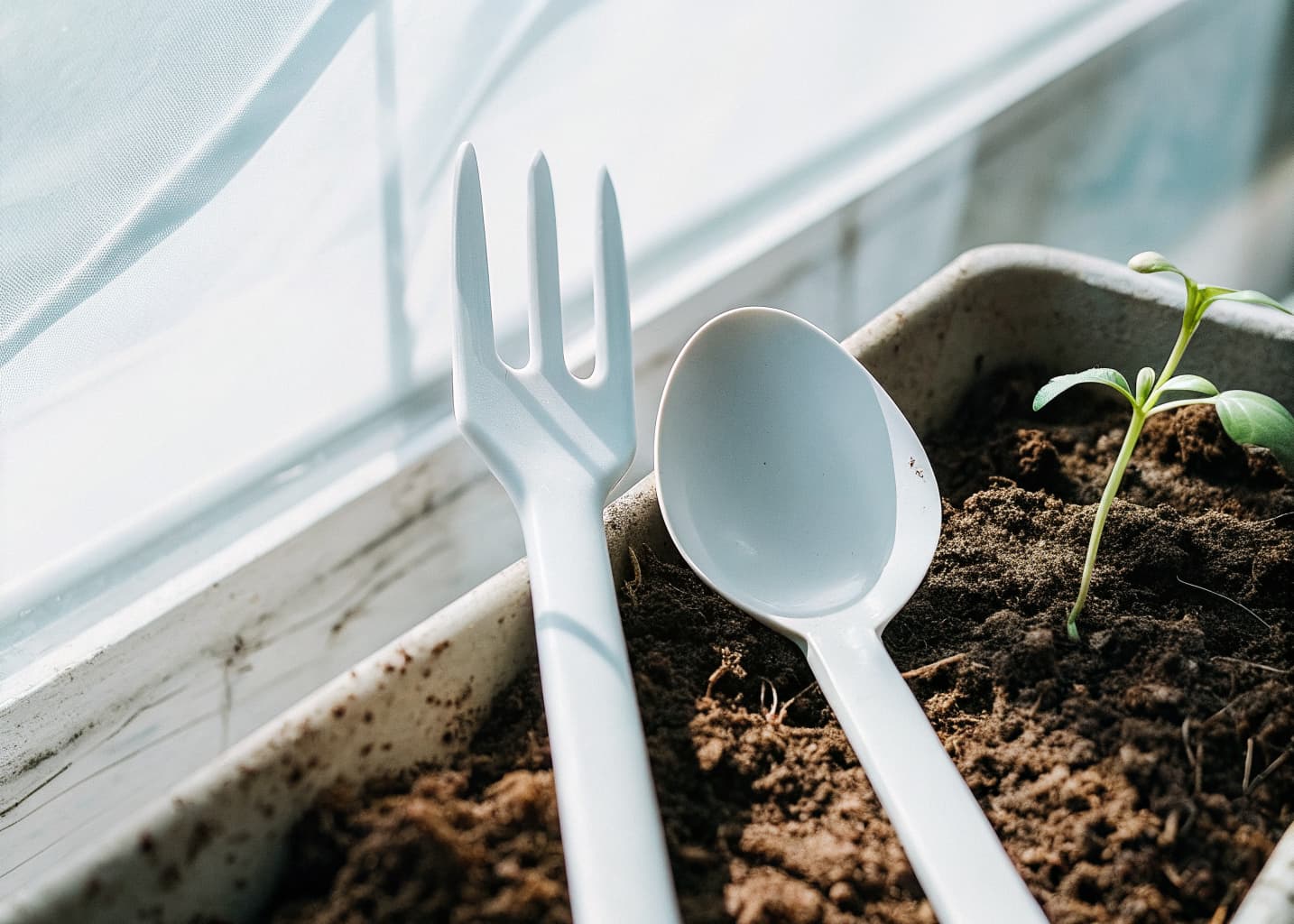
PHA is a bioplastic produced through bacterial fermentation of organic feedstocks like canola oil, rather than refined from petroleum. The material difference is not cosmetic — it is structural. PHA is certified to fully biodegrade in marine, soil, and home compost environments, typically within 90 days to a few years depending on the environment, compared to the 450+ years conventional plastic requires to fragment in a landfill.
Run the math on a realistic 2027 scenario: if just 25% of single-use plastic packaging and foodware were replaced with PHA industry-wide, an estimated 80 to 100 million metric tons of material entering landfills in 2027 would fully biodegrade within a few years instead of persisting for centuries — removing that mass from the landfill's long-term footprint and eliminating the microplastic fragmentation pathway into soil and groundwater entirely, since PHA breaks down into water, carbon dioxide, and biomass with no plastic residue left behind.
Material Comparison: What PHA Replaces, and How It Performs
PHA is not a downgrade in performance — it is engineered to be a drop-in replacement for the plastics generating the most landfill volume, matching their rigidity, barrier properties, and heat tolerance while changing what happens at end of life.
PET (bottles, clamshells)
Strength
Clear, rigid, widely used for beverage bottles and produce packaging.
Limitation
Recycled at under 30% globally; the rest persists for centuries in landfill or ocean.
HDPE (jugs, bottles)
Strength
Durable, moisture-resistant, common in dairy and household containers.
Limitation
Fragments into microplastics over decades; landfill leachate contamination documented in groundwater studies.
Polystyrene (foam containers)
Strength
Lightweight, insulating, cheap to produce at scale.
Limitation
Rarely accepted by recycling programs; breaks into persistent microplastic foam particles almost immediately.
PHA (bioplastic)
Strength
Matches rigidity and barrier performance of the plastics above; certified compostable in marine, soil, and home environments.
Limitation
Currently produced at smaller scale, with per-unit cost still higher than legacy petroleum plastic at full commodity volume.
Why 2027 Is the Inflection Point
2027 is the year several converging pressures make PHA adoption a business decision rather than a sustainability gesture. Extended Producer Responsibility (EPR) laws are now active or scheduled in a growing number of U.S. states and EU member nations, shifting the direct cost of landfill plastic disposal back onto the businesses that generate it. At the same time, corporate ESG reporting requirements are making landfill diversion a disclosed, auditable metric rather than a marketing line.
Combined with consumer demand — recent industry surveys consistently show a majority of consumers say they prefer to buy from brands with visibly sustainable packaging — the businesses that move to PHA ahead of regulatory deadlines are positioned to avoid both the compliance cost and the reputational cost of being a landfill-plastic laggard.
The plastic entering landfills in 2027 isn't inevitable, it's a supply chain decision made today. Every packaging order placed this year either adds to that 400 million ton total or subtracts from it.
Jim McGinnis, V.P. of Marketing & Sales, Pure Form Solution LLC
How Pure Form Solution Fits Into This Picture
Pure Form Solution manufactures PHA and PLA biodegradable products engineered as direct drop-in replacements for the highest-volume plastics driving the 2027 landfill projection — cups, lids, straws, utensils, clamshells, pill bottles, milk and juice jugs, coffee bags, meat packing trays, and rigid and flexible containers.
Each product line is certified for home compostability, industrial compostability, and marine biodegradability, matching the dimensions, rigidity, and equipment compatibility of the conventional plastic it replaces — meaning businesses can switch without retooling packaging lines or redesigning products.
Through structured sustainability programs for hotels, hospitals, restaurants, schools, and event venues, Pure Form Solution maps a business's full plastic footprint and builds a phased transition plan toward the products in this comparison, with the compostability certifications and reporting documentation now required under EPR and ESG frameworks.
The Bottom Line
Roughly 400 million metric tons of plastic waste are on track to be generated globally in 2027, with the large majority landfilled, dumped, or leaked into the environment rather than recycled. That volume does not sit inert — it fragments into microplastics that contaminate soil, groundwater, and ultimately the food and water supply.
PHA offers a measurable, structural change to that trajectory: the same performance as the plastics it replaces, with a decomposition timeline measured in months instead of centuries, and zero microplastic residue left behind at end of life.
The scale of the 2027 landfill projection is a supply chain outcome, not a fixed fate — and the businesses making packaging decisions today are the ones determining which side of that number they land on.
Explore Pure Form Solution Products