
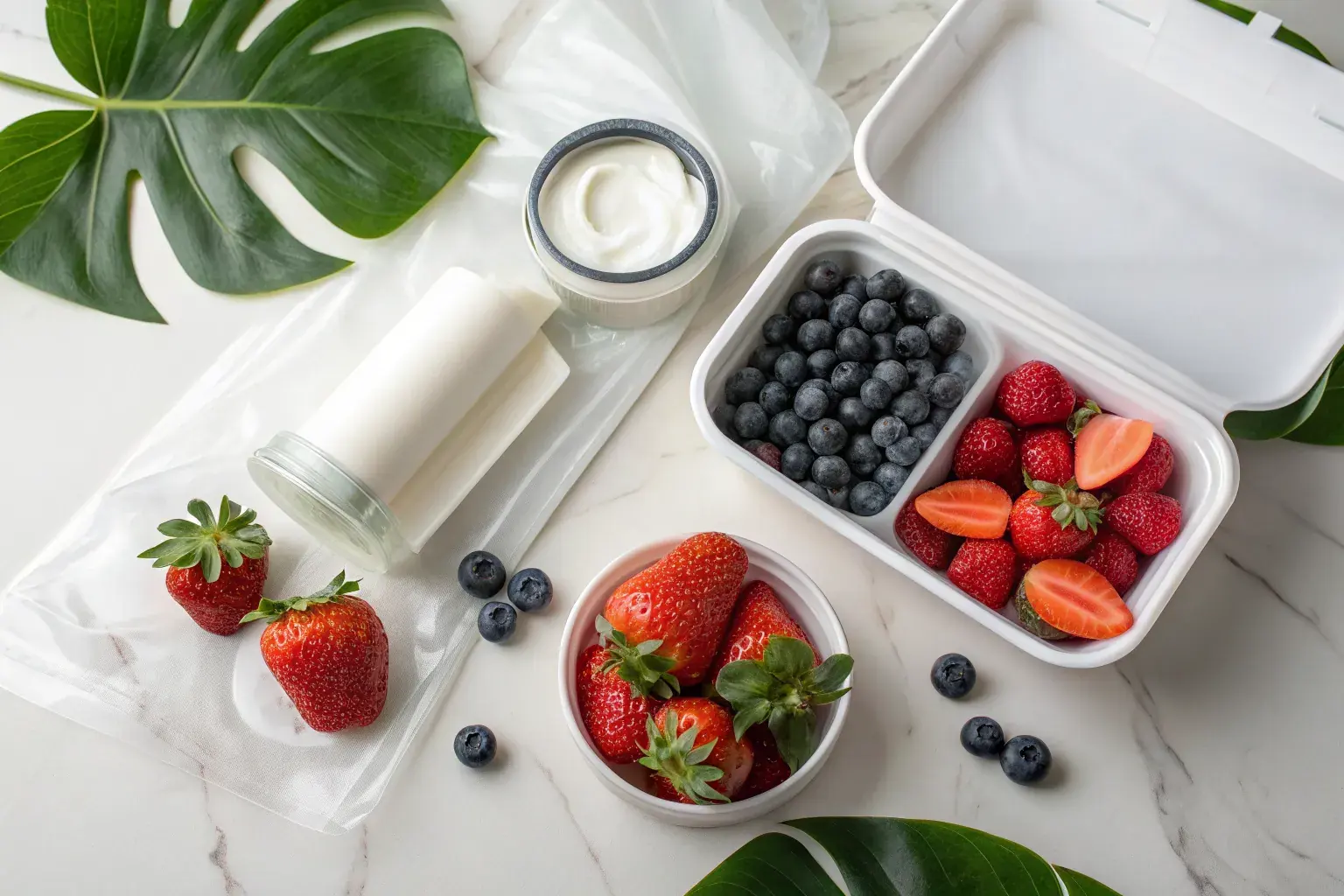
Every yogurt tub in your refrigerator, every cosmetic jar on your bathroom shelf, every roll of cling wrap in your kitchen drawer, every clamshell at the produce market — these are among the most used and most discarded containers in the modern world. They are also made almost entirely from petroleum-based plastics that will persist in the environment for four to five centuries.
Pure Form Solution's PHA rigid and flexible container line is built to replace all of them. Yogurt containers, cosmetic jars, food wrap film, and fresh produce boxes — engineered from polyhydroxyalkanoates (PHA), a bioplastic produced by bacteria fermenting plant-based oils. They perform identically to their conventional counterparts. The only difference is what happens at the end of their life.
The Scale of the Problem Nobody Talks About
Most conversations about plastic pollution focus on bottles and bags. But rigid and flexible containers — the workhorse formats of the food, dairy, and cosmetics industries — represent one of the largest and least-addressed segments of global plastic waste. The numbers are staggering: more than 380 million tons of plastic are produced globally every year, and a disproportionate share of that comes from the consumer packaging formats that PHA containers are designed to replace.
The vast majority of conventional rigid and flexible containers are not recycled. Yogurt tubs made from polystyrene are rejected by most municipal recycling programs. Cosmetic jars — often multi-layer with mixed materials — are virtually unrecyclable. Plastic cling wrap is almost never recycled because it jams sorting machinery. When these items leave consumers' hands, they overwhelmingly end up in landfills or the natural environment, where they begin the slow, centuries-long process of fragmenting into microplastics.
Tons of Plastic Per Year
Global annual plastic production — a figure dominated by the single-use container formats PHA is designed to replace.
Conventional Plastic Lifespan
How long it takes for a conventional yogurt container or produce clamshell to break down in the environment.
Tons Enter Oceans Annually
Every year, 8 million tons of plastic packaging — including rigid containers — enter marine environments.
Microplastics from PHA
PHA containers produce zero microplastic residue when they biodegrade — in soil, compost, or marine environments.
What Makes PHA Different From Every Other Bioplastic
Polyhydroxyalkanoates — PHA — are not just bioplastics. They are biopolymers produced inside living organisms. Specific strains of bacteria, when fed plant-derived oils and sugars as a carbon source, accumulate PHA granules inside their cells as an energy reserve. Those granules are extracted, purified, and processed into a range of polymers with mechanical properties comparable to conventional thermoplastics like polypropylene (PP), polystyrene (PS), and polyethylene terephthalate (PET).
The critical distinction is what happens at end of life. PLA — the first-generation bioplastic widely used for cups and containers — requires industrial composting facilities operating at elevated temperatures to break down. It will not biodegrade in home compost bins, soil, or marine environments. PHA is categorically different. Because it is produced by microorganisms as a natural biopolymer, microorganisms in the environment recognize it as food. A PHA container disposed in ocean water, buried in soil, or placed in a home compost bin will be completely metabolized — leaving only water and carbon dioxide, with zero microplastic residue.
This makes PHA the only bioplastic with certifications covering all four real-world end-of-life scenarios: marine biodegradation, soil biodegradation, home composting, and industrial composting. No other bioplastic covers all four.
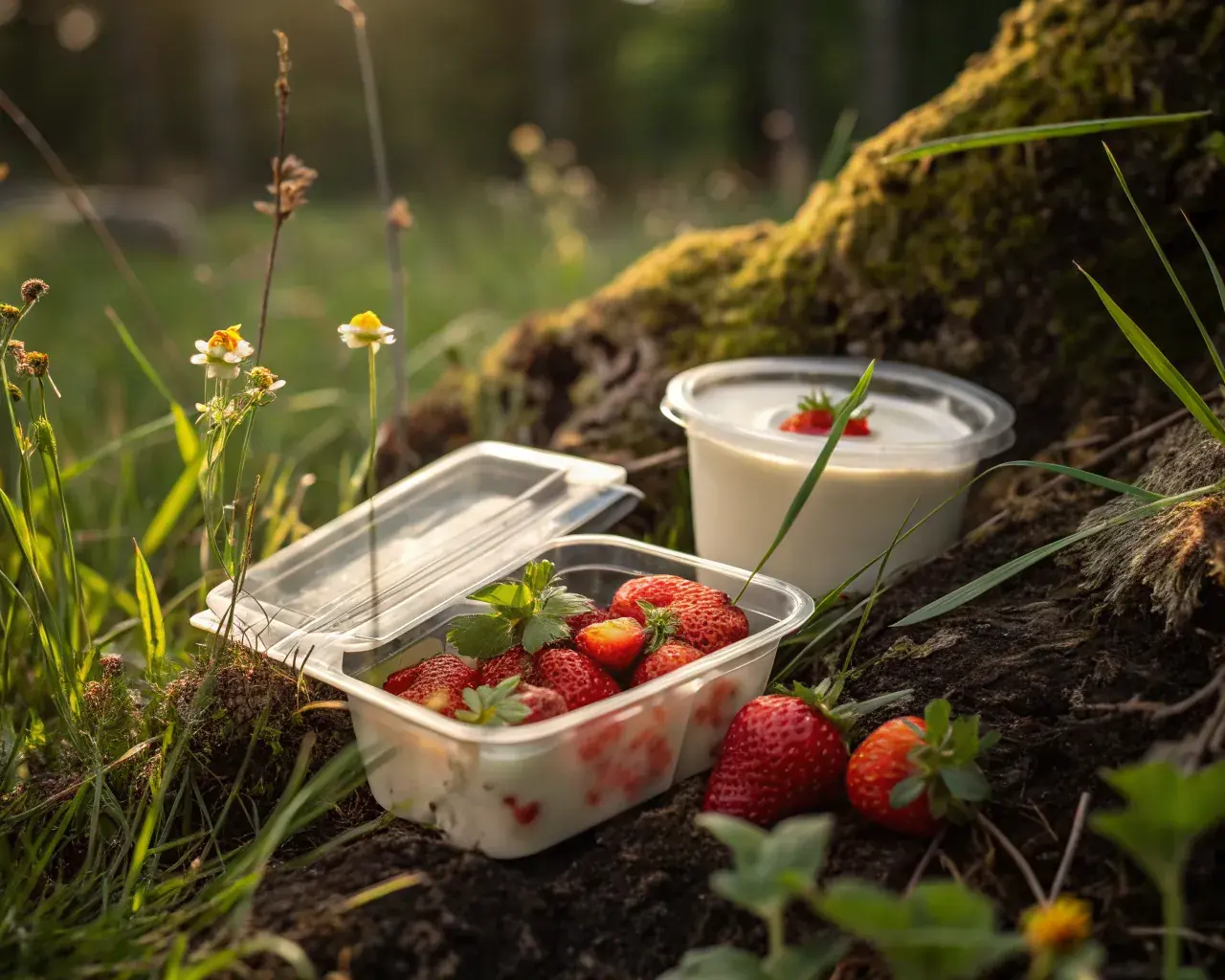
The Full PHA Container Line
Pure Form Solution's rigid and flexible container line covers the four highest-volume packaging formats across food and cosmetics — each engineered to serve as a direct drop-in replacement for its petroleum-based counterpart.
PHA Yogurt Containers
Available in 4 oz, 6 oz, 16 oz, and 32 oz formats. Compatible with heat-seal and snap-lid closure systems. Matches the moisture barrier, structural rigidity, and dairy-grade food contact requirements of conventional PP and PS tubs — without the century-scale environmental legacy.
PHA Cosmetic Jars
Wide-mouth jars, airless pumps, and dropper bottles for skincare, haircare, and beauty formulations. Cosmetic-grade material standards, BPA-free and phthalate-free, compatible with existing filling lines. Custom print-ready finishes available for brand integration.
PHA Food Wrap
Ultra-thin flexible PHA film delivering the same cling, stretch, and oxygen barrier performance as conventional PVDC/PVC food wrap. Cleared for direct contact with fresh produce, meats, and prepared foods. Available in 100 ft and 200 ft household rolls and commercial catering formats.
PHA Fresh Produce Boxes
Crystal-clear clamshells for berries, salads, cherry tomatoes, and mixed produce. Secure snap-latch closure, vented for ethylene management, and compatible with existing produce packing lines. Biodegrades in marine and soil environments — unlike PLA produce packaging that requires industrial composting.
How PHA Containers Are Made
Understanding the production process behind PHA helps explain why it performs so well — and why its end-of-life outcome is so different from conventional plastic.
- 01
Bacterial Fermentation
Specific PHA-producing bacterial strains are cultivated in fermentation tanks fed with plant-based oils (typically canola or palm kernel) as a carbon source. Under controlled nutrient conditions, the bacteria accumulate PHA biopolymer granules intracellularly — storing up to 80% of their dry cell weight as PHA.
- 02
Extraction and Purification
The fermentation broth is processed to lyse the bacterial cells and release the PHA granules. Solvent extraction or aqueous methods separate and purify the raw PHA polymer. The result is a biopolymer powder or pellet ready for compounding and processing.
- 03
Drop-In Manufacturing
PHA rigid containers are produced on standard injection molding and thermoforming equipment — the same machinery used for conventional PP and PS containers. PHA food wrap is produced using existing blown film extrusion lines. No capital retooling is required for brands making the switch.
- 04
True End-of-Life Biodegradation
After use, PHA containers are recognized by naturally occurring bacteria and enzymes as an organic substrate. Whether they end up in ocean water, soil, home compost, or an industrial composting facility, they are metabolized completely — producing only water and CO₂, with zero microplastic residue.
Performance That Matches Conventional Plastic
The leading objection brands hear when considering bioplastic alternatives is performance compromise. PHA containers are engineered to eliminate that objection entirely.
Moisture Barrier
PHA yogurt containers meet dairy-grade moisture vapor transmission rate (MVTR) requirements — matching conventional PP tubs for shelf life and product protection.
Structural Rigidity
PHA rigid containers deliver the same stacking strength, impact resistance, and drop performance as petroleum-based polystyrene and polypropylene containers.
Seal Compatibility
PHA containers are compatible with heat-seal and snap-lid closure systems used in existing dairy and food-service filling operations — no retooling required.
Food & Cosmetic Certification
All PHA containers are food-contact certified and meet cosmetic-grade material standards — BPA-free, phthalate-free, and safe for direct product contact.
Oxygen Barrier
PHA food wrap delivers equivalent oxygen barrier performance to PVDC cling film — protecting fresh produce, meats, and prepared foods through their intended shelf life.
Temperature Resistance
PHA containers maintain structural integrity across the temperature ranges required for refrigerated dairy storage, cosmetic manufacturing, and fresh produce packing.
Certifications and Environmental Credentials
PHA containers from Pure Form Solution are backed by the most comprehensive certification portfolio available in biodegradable packaging — covering every realistic end-of-life disposal scenario.
Marine Biodegradation Certified
PHA is certified to biodegrade in marine water environments — the most demanding and consequential end-of-life test. No other bioplastic carries this certification across all product formats.
Soil Biodegradation Certified
Certified to biodegrade in soil environments without leaving microplastic residue or toxic byproducts — including in landfill anaerobic conditions over time.
Home Compost Certified
Unlike PLA, PHA breaks down in home compost bins at ambient temperatures — no industrial composting infrastructure required.
Industrial Composting Certified
PHA meets OK Compost Industrial certification standards — compatible with commercial composting infrastructure where it exists.
BPA-Free and Phthalate-Free
All PHA containers contain no bisphenol A (BPA), phthalate plasticizers, or petroleum-derived chemical additives — safe for food contact and cosmetic applications.
The Business Case for Making the Switch
Brands considering the move to PHA containers face a straightforward value proposition. On the performance side, PHA containers are drop-in replacements — same machinery, same filling lines, same closure systems. There is no capital investment required to adopt PHA at the container level.
On the regulatory side, the trajectory is clear. Extended Producer Responsibility (EPR) legislation is expanding across the EU, Canada, and U.S. states. Plastic packaging taxes are being introduced or planned in multiple jurisdictions. Single-use plastic container regulations are accelerating globally. Brands that switch to certified-biodegradable PHA containers are not just meeting current sustainability commitments — they are positioning themselves ahead of the regulatory curve.
And on the consumer side, the evidence is consistent: sustainability claims that are backed by third-party certifications — marine biodegradable, zero microplastics, petroleum-free — resonate measurably with purchasing decisions in the food, dairy, and beauty categories. PHA containers give brands a sustainability story that is both technically accurate and genuinely differentiated.
The question brands should be asking is not whether PHA containers perform well enough — they do. The question is whether the cost of staying with petroleum plastic, in regulatory risk, consumer perception, and environmental liability, has already exceeded the cost of switching.
Jim McGinnis — V.P. of Marketing & Sales, Pure Form Solution LLC
The Container Problem Has a Solution
Rigid and flexible containers are not a niche packaging problem. They are the backbone of how food and personal care products reach consumers — and they represent billions of units of petroleum plastic disposed annually into landfills and the environment. Conventional recycling has not solved this problem, and decades of evidence suggest it will not.
PHA containers offer something genuinely different: packaging that performs identically to conventional plastic across every functional requirement, manufactured on existing equipment, certified biodegradable in every real-world disposal environment, and leaving zero microplastic residue at end of life.
The transition from petroleum plastic to PHA containers is not a sacrifice. It is an upgrade — one that happens to eliminate a five-century environmental burden with every unit shipped.
Explore Pure Form Solution Products