
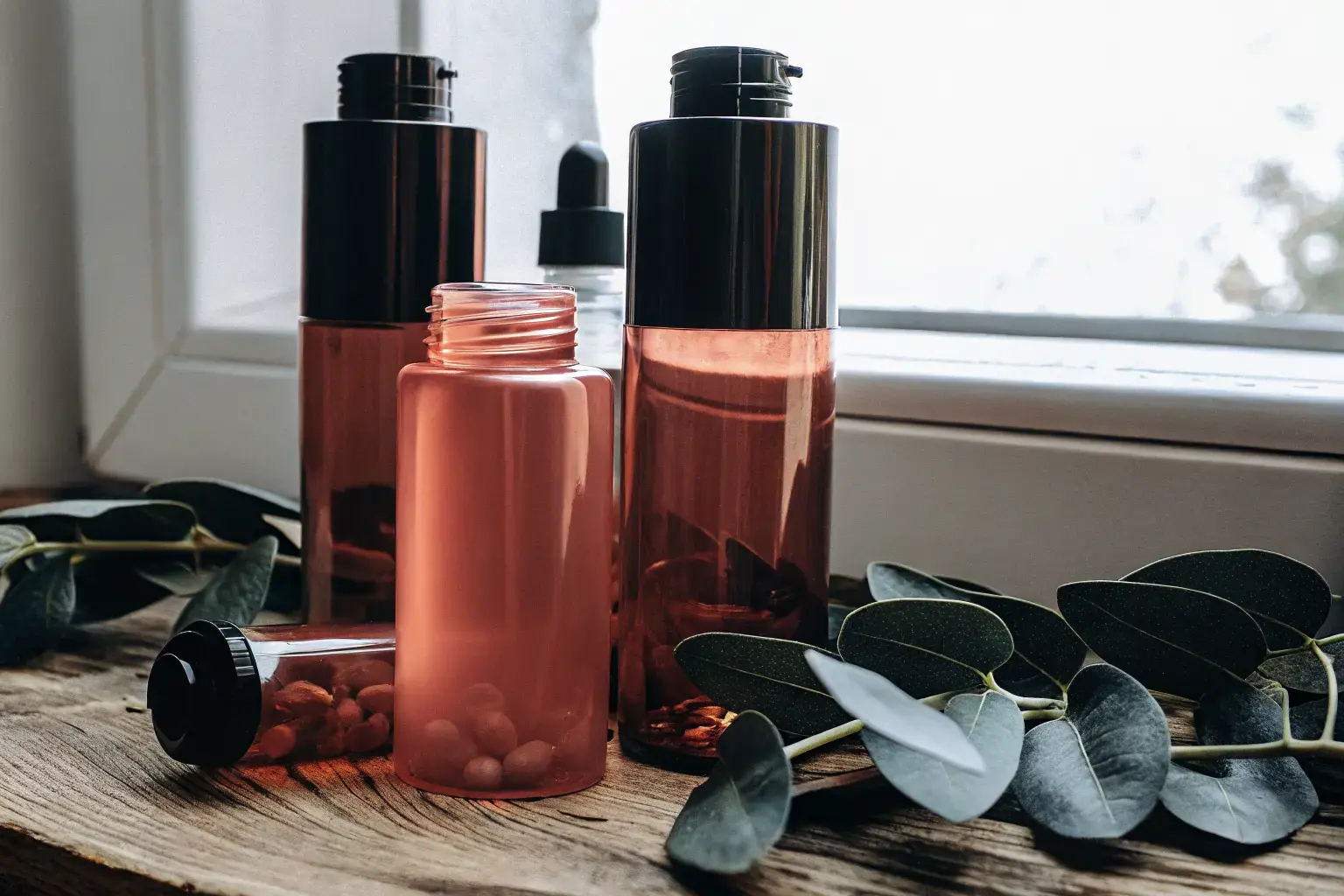
Over 4 billion plastic pill bottles are discarded in the United States every year. Less than 10% are ever recycled. The rest spend the next 450 years in landfills and waterways, slowly fragmenting into the microplastics that now appear in our blood, our lungs, and our food. PHA pill bottles offer the pharmacy industry its first genuine exit from this cycle.
Polyhydroxyalkanoates — or PHA — are biopolymers produced naturally by bacteria consuming plant-based oils and organic waste. When applied to pharmaceutical packaging, the result is a pill bottle that performs identically to conventional HDPE while leaving no permanent trace in the environment. No microplastics. No petroleum. No centuries of persistence. Just a bottle that does its job and then returns to nature.
The Scale of the Plastic Pill Bottle Problem
Most people never think twice about the amber bottle their prescription arrives in. But multiply that bottle by 4 billion — the number discarded in the U.S. alone every year — and the environmental footprint becomes impossible to ignore. Conventional HDPE pharmacy bottles face a unique recycling barrier: they are routinely excluded from municipal recycling streams because residual medication contamination makes them hazardous to process. As a result, virtually none of them complete a recycling loop.
Once in a landfill, conventional HDPE takes approximately 450 years to break down — and "break down" is a misleading term. It does not biodegrade. It fragments. Each bottle becomes thousands of microplastic particles that migrate into groundwater, enter soil ecosystems, and accumulate in the bodies of the organisms living within them — including humans. Pharmaceutical packaging is overdue for a fundamental rethink.
4 Billion discarded yearly
Over 4 billion plastic pill bottles are thrown away in the U.S. annually — with fewer than 10% ever reaching a recycling facility.
450 years to fragment
Conventional HDPE pharmacy bottles take 450 years to fragment — and even then they only break into microplastics, never fully disappearing.
Zero recycling pathway
Medication residue disqualifies most pill bottles from standard recycling streams, sending nearly all of them directly to landfill.
What Makes PHA Different from Conventional Plastic
PHA is not a modified petroleum plastic — it is a biopolymer built from the ground up by living bacteria. When fed plant oils or organic carbon sources, certain bacterial strains accumulate PHA granules inside their cells as a form of energy storage. These granules are harvested, processed, and molded into packaging materials that match the mechanical and barrier properties of conventional plastics — without any of the petrochemical inputs.
What defines PHA — and what separates it from every other bioplastic on the market — is where it ends up. PLA requires industrial composting at high temperatures. Petroleum plastics require 450+ years. PHA requires neither. In soil, freshwater, or marine environments, naturally occurring bacteria recognize and metabolize PHA using the same enzymatic processes that produced it. The result is complete biodegradation into water, CO₂, and organic biomass — within months, not centuries.
For pharmacy bottles specifically, this represents a decisive advantage: a bottle that can safely biodegrade even if it ends up in a landfill, an improperly sorted recycling stream, or a natural environment where conventional plastic would persist indefinitely.
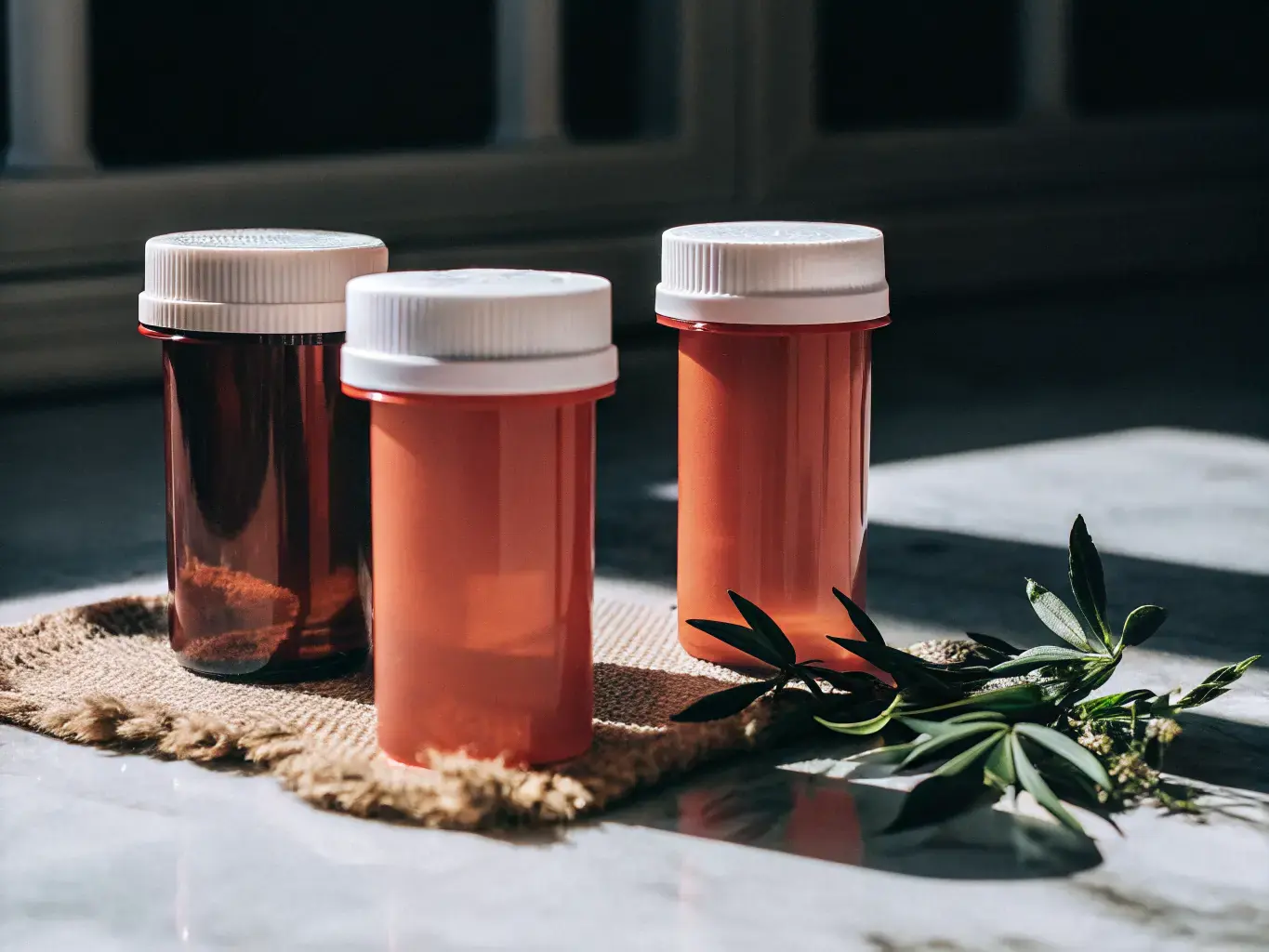
Seven Key Advantages of PHA Pill Bottles
PHA pill bottles are not just environmentally preferable — they are a technically complete replacement for HDPE pharmacy bottles. Here is what makes them the superior choice across every dimension that matters to pharmacies, patients, and the environment.
- 01
Complete Biodegradability in Real-World Conditions
Unlike PLA, which requires industrial composting facilities to break down, PHA biodegrades in soil, freshwater, and marine environments through natural bacterial activity. A PHA pill bottle that ends up in a landfill will biodegrade within months. One that enters a waterway will not persist for centuries. This is the only pharmaceutical packaging material that offers genuine end-of-life biodegradation without requiring specialized infrastructure.
- 02
Zero Microplastic Generation
Conventional plastic pill bottles fragment under UV radiation and physical stress, releasing microplastic particles that contaminate soil and water systems. PHA does not fragment — it biodegrades enzymatically, meaning bacteria consume and metabolize the material completely. The result is CO₂, water, and organic biomass. No microplastic residue at any stage of degradation.
- 03
100% Petroleum-Free Manufacturing
PHA is synthesized by bacteria from plant-based feedstocks including plant oils and agricultural byproducts. No fossil fuels are required in the production process. This eliminates the carbon debt that conventional HDPE carries from extraction through manufacturing — a meaningful advantage for pharmaceutical companies with sustainability commitments and supply chain transparency requirements.
- 04
BPA-Free and Phthalate-Free by Nature
Because PHA is produced biologically without synthetic additives, plasticizers, or chemical stabilizers, it contains none of the endocrine-disrupting compounds associated with conventional plastics. No BPA. No phthalates. No chemical leaching into stored medications. For patients who take multiple medications daily and rely on their pill bottle as a long-term storage container, this matters.
- 05
Drop-In Replacement for HDPE — No Reformulation Required
PHA pill bottles are engineered to match the dimensional specifications of standard HDPE pharmacy bottles. They are available in 30, 60, and 90-count sizes, feature the amber UV-protective tint required for light-sensitive medications, and are fully compatible with child-resistant cap systems. Pharmacies switching to PHA do not need to change their dispensing equipment, labeling processes, or supplier relationships.
- 06
Pharmaceutical-Grade Performance
PHA maintains the moisture barrier, structural integrity, and chemical resistance required for pharmaceutical packaging. It passes the same performance standards as HDPE for medication storage — protecting contents from humidity, temperature variation, and physical impact during handling and transport. The switch to PHA is a materials change, not a performance compromise.
- 07
Regulatory Alignment and Future-Proofing
Single-use plastic regulations are expanding globally. The European Union, multiple U.S. states, and international markets are implementing extended producer responsibility (EPR) frameworks that will increasingly penalize non-biodegradable packaging. PHA is positioned to meet the most stringent biodegradability certifications — including marine degradation standards — that conventional plastics and most other bioplastics cannot achieve. Adopting PHA now positions pharmacies and pharmaceutical companies ahead of compliance requirements.
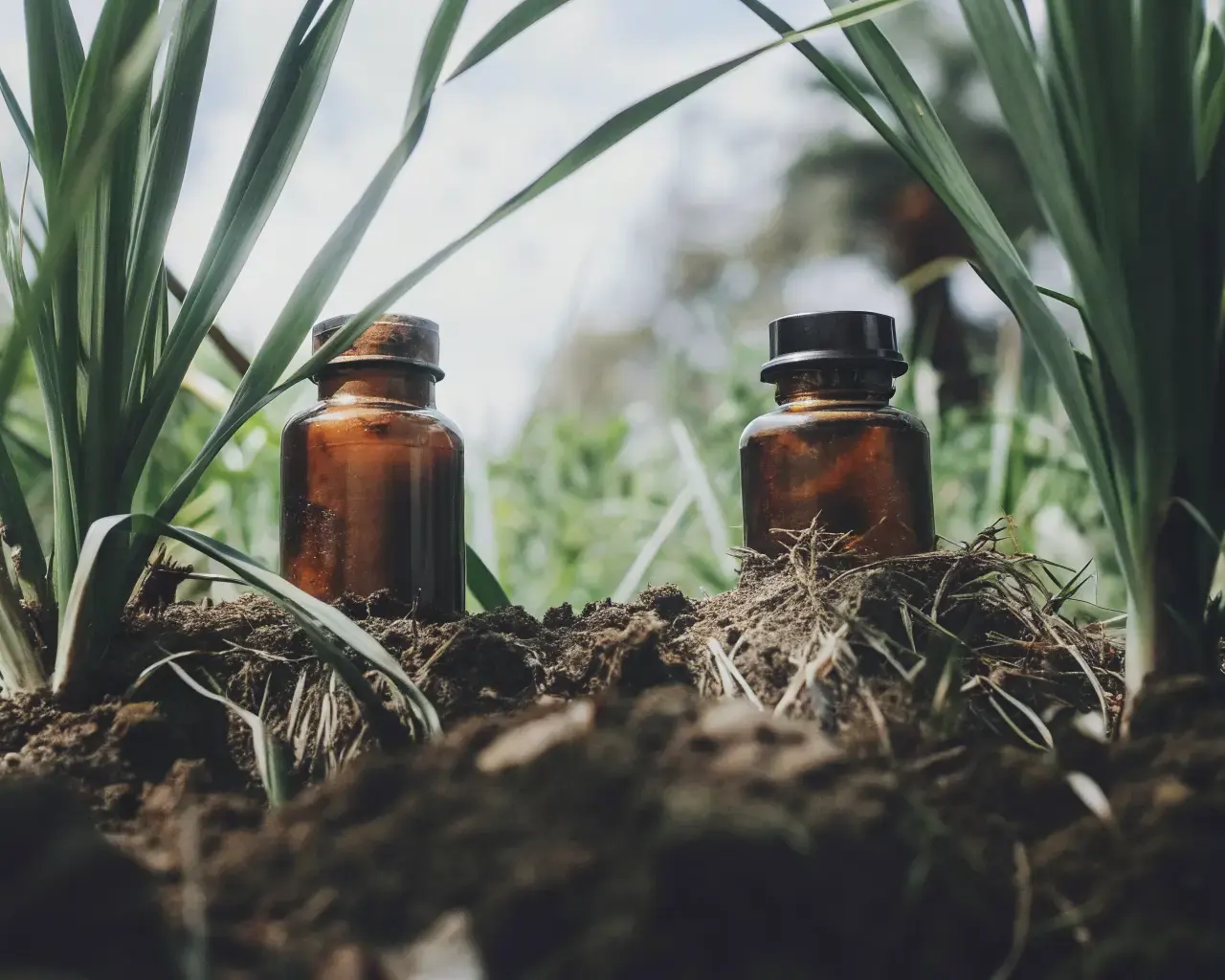
PHA Pill Bottles vs. Conventional HDPE: A Direct Comparison
The case for PHA becomes clearest when placed directly alongside the conventional HDPE bottles that currently dominate pharmacy shelves. Every functional characteristic that matters for pharmaceutical packaging is preserved — while the environmental profile changes completely.
Conventional HDPE Bottles
Strength
Low cost, established supply chains, proven performance track record
Limitation
450+ years to decompose. Generates microplastics. Petroleum-derived. Near-zero recycling rate due to medication contamination. BPA and chemical leaching risk.
Best For
Legacy applications where end-of-life environmental impact is not a consideration
PHA Pill Bottles
Strength
Full biodegradation in soil, freshwater, and marine environments. Zero microplastics. Petroleum-free. BPA-free. Drop-in replacement for HDPE.
Limitation
Higher material cost vs. HDPE — offset by regulatory future-proofing and sustainability reporting value
Best For
Any pharmacy or pharmaceutical company committed to sustainable packaging without functional compromise
The Case for Pharmacies and Pharmaceutical Companies
Pharmacies occupy a unique position in the sustainability conversation. They are among the largest distributors of single-use plastic packaging, and they serve populations — elderly patients, chronic disease patients, pediatric patients — who interact with that packaging daily, often at elevated health sensitivity. The decision to adopt PHA pill bottles is not just an environmental commitment. It is a patient care decision.
The business case is equally compelling. Sustainability reporting has become a standard expectation from institutional investors, insurance networks, and healthcare systems procurement teams. Pharmacies that can demonstrate material-level sustainability credentials — not just carbon offsets, but actual biodegradable packaging — are increasingly competitive in institutional supply relationships. PHA pill bottles provide that credential in tangible, verifiable form.
Regulatory momentum reinforces the urgency. Extended producer responsibility frameworks are shifting the cost of plastic waste management onto the producers and distributors of that waste. Pharmacies that have already transitioned to biodegradable packaging before EPR mandates take effect will avoid compliance costs and position themselves as category leaders rather than compliance laggards.
"Four billion pill bottles a year — that is the problem in a single number. PHA gives the pharmacy industry a direct answer: the same bottle, the same performance, and no environmental debt left behind when it is done."
— Jim McGinnis, V.P. of Marketing & Sales, Pure Form Solution LLC
Pure Form Solution's PHA Pill Bottle Line
Pure Form Solution's biodegradable pill bottle line is built on the same PHA material science that underpins our full sustainable packaging portfolio. Our bottles are engineered to pharmaceutical-grade specifications — matching HDPE in dimensional tolerances, UV protection, moisture barrier performance, and child-resistant cap compatibility — while delivering complete biodegradability across all real-world disposal environments.
We work with certified manufacturers whose testing protocols confirm zero microplastic residue after full degradation and material performance standards that satisfy pharmaceutical regulatory requirements. Every bottle in our line is 100% petroleum-free, free of synthetic additives, and designed to return completely to the natural environment at end of life.
For pharmacies and pharmaceutical companies ready to make the transition, we offer supply consultation, volume programs, and sustainability documentation to support your reporting and compliance requirements. The first step is as simple as replacing one bottle at a time.
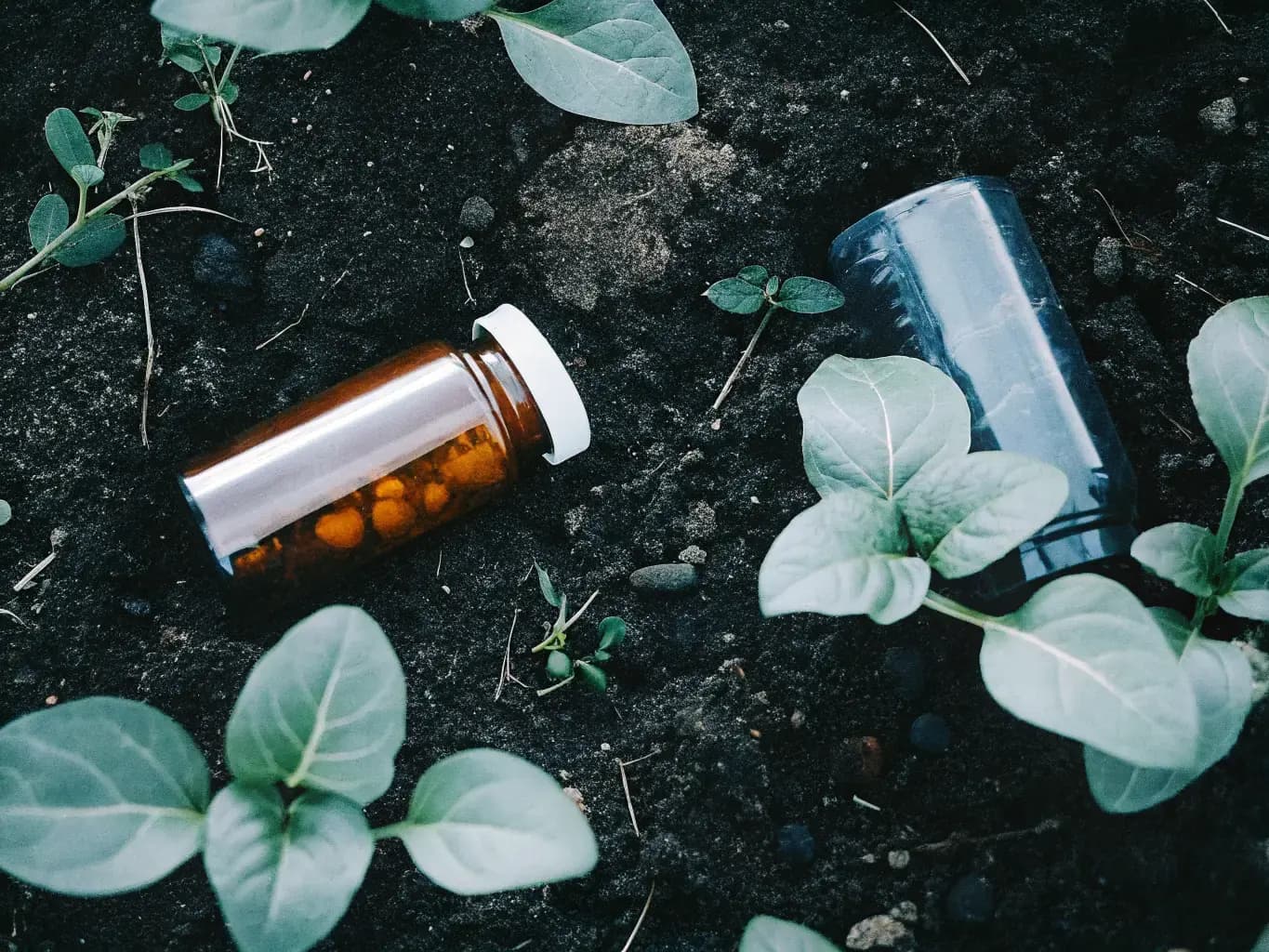
The Bottle That Ends the Cycle
Every plastic pill bottle ever made still exists somewhere in the environment. None of the 4 billion discarded each year in the U.S. will fully disappear within any human lifetime. They will fragment, migrate, and accumulate — leaving a pharmaceutical industry-shaped hole in the planet's future.
PHA pill bottles do not add to that accumulation. They perform the same function — protecting medications through dispensing, transport, and patient use — and then return completely to the organic matter they were made from. No microplastics. No petroleum legacy. No environmental debt.
That is not an environmental compromise. That is a better product. And the pharmacy industry — which reaches more households, more frequently, through more packaging than almost any other sector — is uniquely positioned to make the switch count.
Explore Pure Form Solution Products