
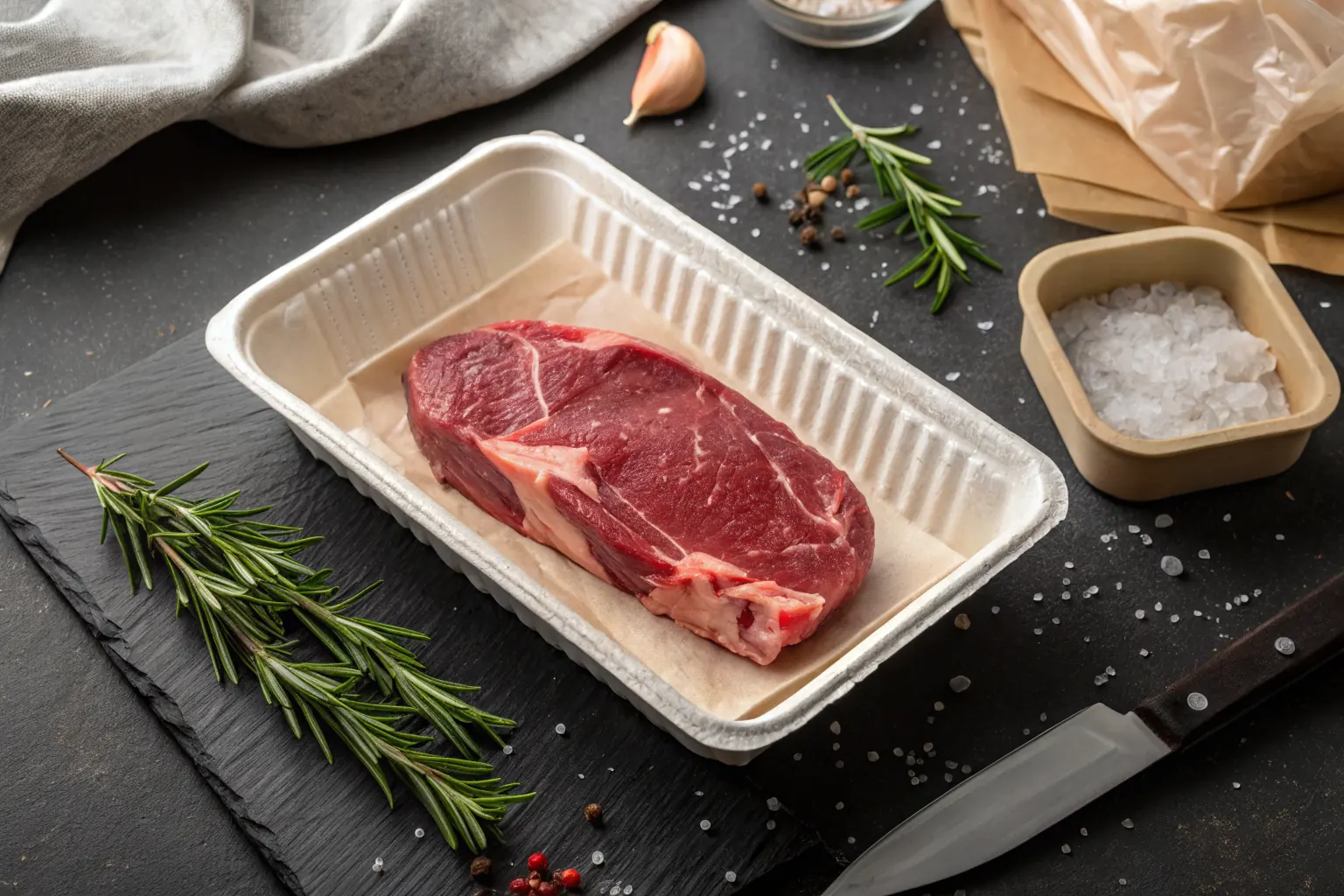
Every fresh cut of steak, chicken breast, or fillet sold in a grocery store sits on a plastic tray — and almost none of those trays are ever recycled. The meat packing industry produces over 8 billion of these trays annually, and blood, moisture, and fat contamination disqualify nearly all of them from curbside recycling streams.
PHA meat packing trays offer a genuine alternative: a drop-in replacement that matches the rigidity, footprint, and MAP-sealing compatibility of conventional PET and polypropylene trays, while biodegrading completely in marine, soil, and home compost environments — leaving zero microplastics behind.
The Meat Packing Industry's Plastic Blind Spot
Meat packing trays are a category most sustainability conversations skip over. Bottles, bags, and straws get the headlines, but the humble MAP tray — the rigid rectangular container beneath the shrink film on every package of chicken thighs or ground beef — represents one of the largest single volumes of single-use plastic in the food supply chain.
Unlike a clean plastic bottle, a used meat tray is contaminated with blood, fat, and moisture the moment it's opened. Municipal recycling facilities routinely reject contaminated trays outright, meaning the overwhelming majority go straight to landfill regardless of the resin's technical recyclability.
A tray built to protect a piece of meat for a few days on a retail shelf then spends over 400 years breaking down into smaller and smaller plastic fragments — fragments that end up in soil, waterways, and eventually the food chain itself.
8B+ Trays a Year
Plastic meat and poultry trays produced globally every year across processing and retail packing lines.
400+ Year Lifespan
How long a conventional polypropylene or PET meat tray takes to fully break down in a landfill.
<10% Recycled
Share of contaminated meat packaging that ever actually enters a functioning recycling stream.
What Makes PHA Different
PHA — polyhydroxyalkanoates — is a bioplastic produced through bacterial fermentation of plant-based oils, not petroleum refining. The bacteria store PHA internally as an energy reserve, which is then harvested and processed into a rigid, moldable material.
Because PHA is a bio-based polymer rather than a petroleum derivative, it retains the ability to biodegrade in natural environments — marine water, soil, and both home and industrial compost — instead of merely fragmenting into microplastics like conventional plastic does.
For meat packing specifically, this matters because trays are already destined for contamination. A tray that can't be cleaned and recycled anyway should, at minimum, not persist in the environment for centuries after use.
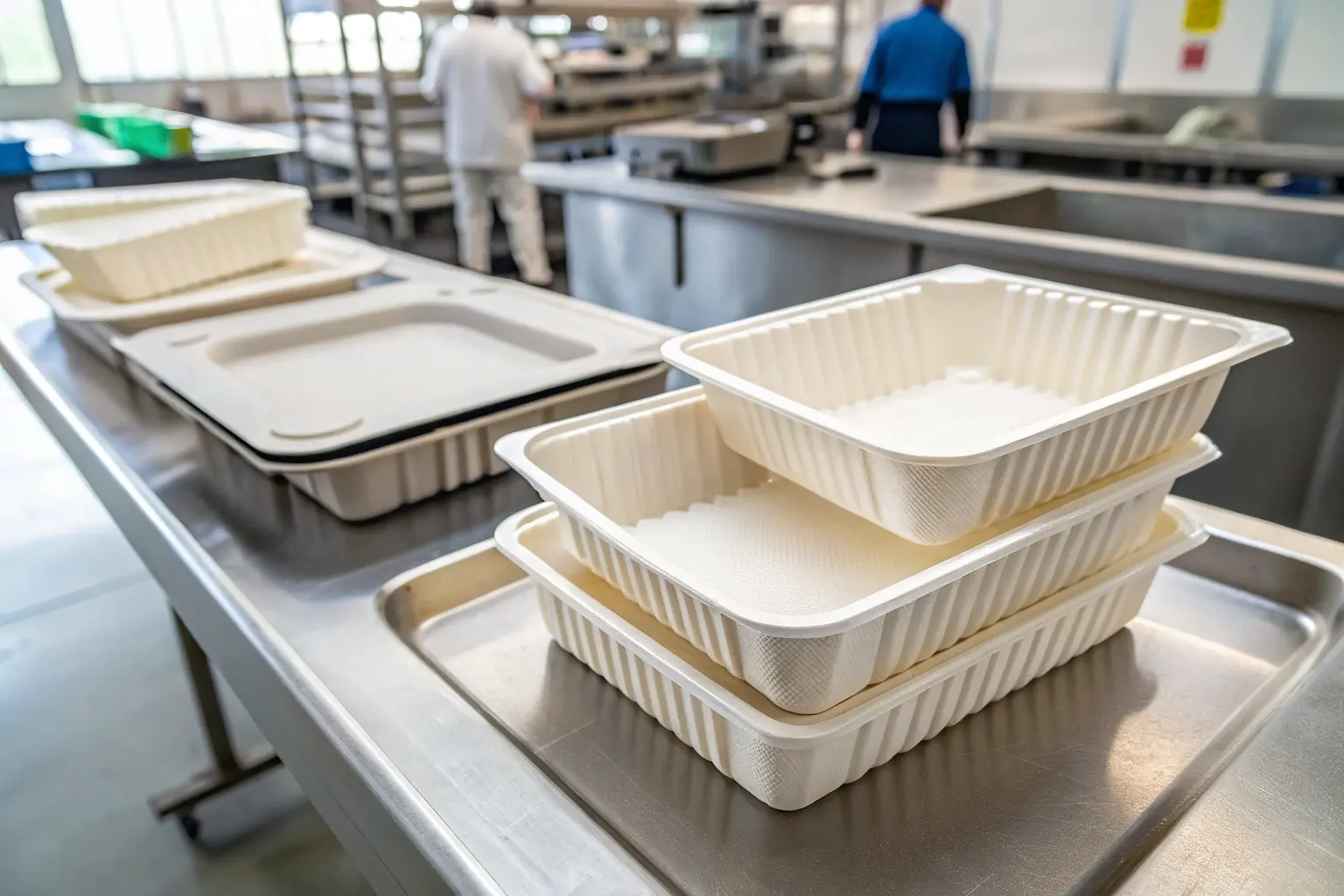
Six Reasons Meat Packers Are Switching
PHA meat packing trays aren't a compromise product — they're engineered to match or exceed conventional tray performance while solving the end-of-life problem entirely.
- 01
Matches Standard MAP Tray Dimensions
Available in the same common footprints — 13×13, 19×13, 26×20, and 33×22 cm — with depth options from 3.5cm to 7cm, so no retooling is required on existing packing lines.
- 02
Compatible With Existing Sealing Equipment
Works directly with existing film-sealing and modified atmosphere packaging (MAP) equipment used for fresh meat, poultry, and seafood — no capital investment needed.
- 03
Ribbed Base Absorbs Purge Liquid
The ribbed tray base is engineered to wick moisture and purge liquid away from the product, keeping cuts elevated and presentation retail-ready, just like conventional trays.
- 04
Food-Grade Safe for Direct Contact
BPA-free and phthalate-free, certified safe for direct contact with raw meat, poultry, and seafood across processing and retail packing environments.
- 05
Fully Compostable at End of Life
Biodegrades completely in marine, soil, home compost, and industrial composting environments — including trays contaminated with blood, fat, and moisture that would otherwise be rejected by recycling facilities.
- 06
Zero Microplastics Left Behind
Unlike conventional plastic, which fragments into ever-smaller microplastic particles, PHA breaks down completely at the molecular level, returning to nature without toxic residue.
PHA vs. Conventional PET/PP Trays
Side by side, the performance gap between PHA and conventional meat tray plastics is smaller than most packers expect — while the environmental gap is enormous.
Conventional PET/PP Tray
Strengths
Rigid, moisture-resistant, and inexpensive at scale — the current industry default across meat, poultry, and seafood packing.
Limitations
Contamination from blood, fat, and moisture disqualifies nearly all trays from recycling. Persists in landfill or waterways for 400+ years, fragmenting into microplastics.
Best For
Operations not yet ready to transition packaging materials.
PHA Meat Packing Tray
Strengths
Matches PET/PP rigidity, footprint, and MAP-sealing compatibility. Ribbed base manages purge liquid identically to conventional trays.
Limitations
Currently a higher per-unit cost than commodity PET/PP, offset by sustainability positioning and reduced long-term environmental liability.
Best For
Meat processors, poultry packers, seafood packers, and retail butcher counters ready to eliminate single-use plastic waste.
Built for Every Stage of the Supply Chain
PHA meat packing trays are designed to serve every point where fresh product meets packaging — from large-scale processing plants running high-speed MAP lines to independent butcher counters portioning cuts for individual customers.
Fresh cuts and portions — steaks, chops, and ground meat sold at retail and butcher counters — benefit from a tray that presents just as well as conventional plastic while eliminating end-of-life waste.
Poultry packers and seafood processors face some of the highest purge-liquid volumes in the industry; the ribbed base design was engineered specifically to handle that moisture load without compromising structural integrity.
The meat packing industry has been waiting for a tray that doesn't force a trade-off between performance and sustainability. PHA trays match the equipment compatibility packers need without asking them to accept a lesser product.
Pure Form Solution Product Team
A Direct Path to Sustainable Meat Packing
Switching to PHA meat packing trays doesn't require a packaging redesign or new equipment. Because our trays match standard MAP tray footprints and depths, they integrate directly into existing tray-sealing and modified atmosphere packaging lines.
Pure Form Solution works with meat processors, poultry packers, seafood packers, and retail butcher counters to identify the right tray sizes and depths for their specific product mix, then supports the transition with sample runs before full-volume adoption.
The result is a packaging switch that customers won't notice at the shelf — but that removes billions of plastic trays a year from landfills, waterways, and the microplastic cycle entirely.
The Bottom Line
Meat packing trays are one of the food industry's largest overlooked plastic waste streams — contaminated by design, and almost never recycled regardless of the resin used.
PHA meat packing trays solve the problem at its root: a tray built to match existing packing line requirements exactly, but engineered to return completely to nature instead of persisting for centuries.
For meat processors, poultry packers, seafood packers, and butcher counters looking for a genuine sustainability upgrade — not just a marketing claim — PHA meat packing trays are ready to integrate today.
Explore Pure Form Solution Products